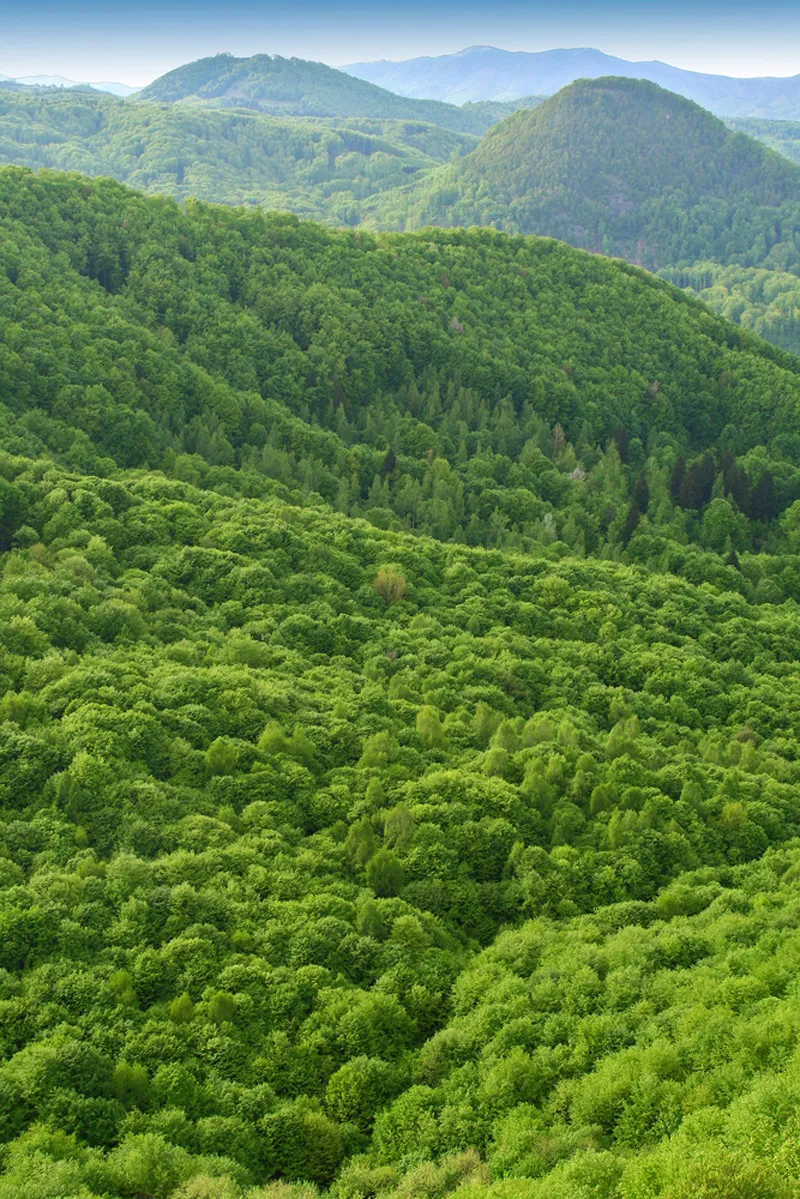
New Earth Explorer Satellite to Map Global Forests

Get the world’s most fascinating discoveries delivered straight to your inbox.
You are now subscribed
Your newsletter sign-up was successful
Want to add more newsletters?
Delivered Daily
Daily Newsletter
Sign up for the latest discoveries, groundbreaking research and fascinating breakthroughs that impact you and the wider world direct to your inbox.
Once a week
Life's Little Mysteries
Feed your curiosity with an exclusive mystery every week, solved with science and delivered direct to your inbox before it's seen anywhere else.
Once a week
How It Works
Sign up to our free science & technology newsletter for your weekly fix of fascinating articles, quick quizzes, amazing images, and more
Delivered daily
Space.com Newsletter
Breaking space news, the latest updates on rocket launches, skywatching events and more!
Once a month
Watch This Space
Sign up to our monthly entertainment newsletter to keep up with all our coverage of the latest sci-fi and space movies, tv shows, games and books.
Once a week
Night Sky This Week
Discover this week's must-see night sky events, moon phases, and stunning astrophotos. Sign up for our skywatching newsletter and explore the universe with us!
Join the club
Get full access to premium articles, exclusive features and a growing list of member rewards.
The European Space Agency hopes to launch a new Earth Explorer satellite in 2020 that will map the extent and composition of the world’s forests.
The satellite — called BIOMASS — will use long range radar to pierce through clouds and collect data from forested regions inaccessible from the ground, such as the boreal forests of Russia and the Amazon rain forest. The ESA hopes the resulting data and 3D forest maps will help researchers measure the total amount of carbon stored in forests, and better understand the role of deforestation in global climate change. The new data could also help inform reforestation projects aimed to slow the pace of climate change.

"BIOMASS will be a hugely important instrument for global environmental science research in the coming years, and its observations will be the basis of significant environmental policy in the areas of carbon cycling and global warming," Hank Shugart, an environmental scientist at the University of Virginia and member of the BIOMASS advisory committee to the ESA, said in a statement.
The BIOMASS satellite will cost roughly $525 million, and is the seventh in ESA's fleet of Earth Explorer satellites, of which three are currently in orbit.
Follow Laura Poppick on Twitter. Follow us @livescience, Facebook & Google+. Original article on LiveScience.com.
Get the world’s most fascinating discoveries delivered straight to your inbox.