 Live Science Plus





You are now subscribed
Your newsletter sign-up was successful
Want to add more newsletters?

Delivered Daily
Daily Newsletter
Sign up for the latest discoveries, groundbreaking research and fascinating breakthroughs that impact you and the wider world direct to your inbox.

Once a week
Life's Little Mysteries
Feed your curiosity with an exclusive mystery every week, solved with science and delivered direct to your inbox before it's seen anywhere else.

Once a week
How It Works
Sign up to our free science & technology newsletter for your weekly fix of fascinating articles, quick quizzes, amazing images, and more

Delivered daily
Space.com Newsletter
Breaking space news, the latest updates on rocket launches, skywatching events and more!

Once a month
Watch This Space
Sign up to our monthly entertainment newsletter to keep up with all our coverage of the latest sci-fi and space movies, tv shows, games and books.

Once a week
Night Sky This Week
Discover this week's must-see night sky events, moon phases, and stunning astrophotos. Sign up for our skywatching newsletter and explore the universe with us!
Join the club
Get full access to premium articles, exclusive features and a growing list of member rewards.
The fertilizer plant explosion in West, Texas, on Wednesday (April 17) killed at least a dozen people and destroyed several blocks of the small town.
Is your neighborhood next?
But the disaster is bringing increased attention to the thousands of facilities nationwide that store or manufacture fertilizer, especially ammonium nitrate, an explosive chemical often used in agricultural fertilizers. [Infographic: Why Fertilizer Is Dangerous]
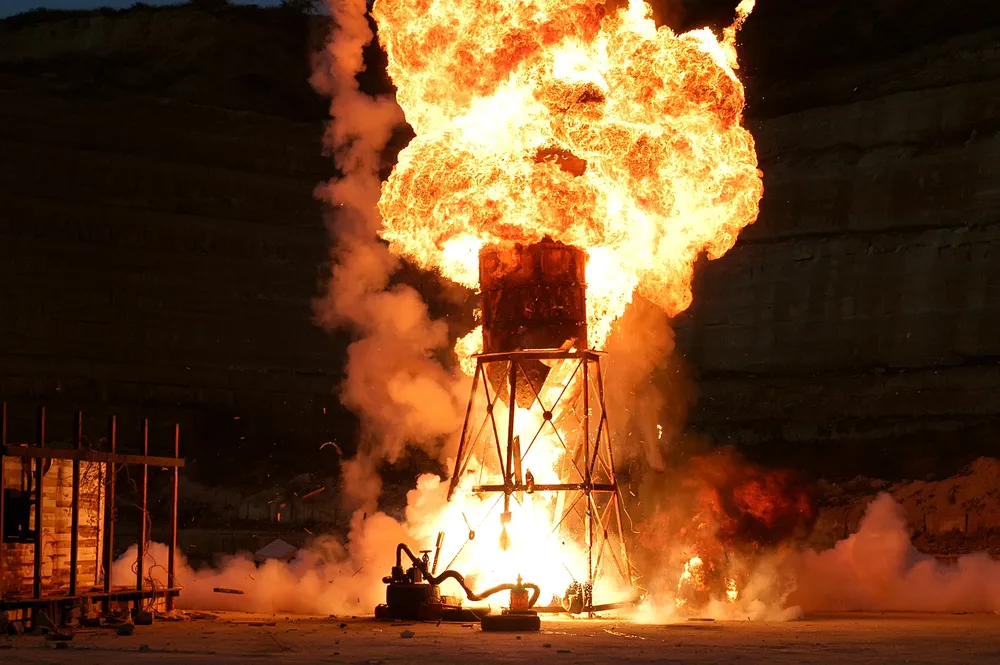
Ammonium nitrate is believed to be the cause of the fireball that was seen about two hours after the blaze started on Wednesday (April 17) evening.
In February, Adair Grain (the owner of the West Fertilizer Co. fertilizer plant) informed the Texas Department of Health Services that it was storing up to 270 tons of ammonium nitrate at the facility, according to NBC News.
The West, Texas, plant is just one of about 6,000 facilities scattered across the country — located in residential neighborhoods, small towns and urban areas — that manufacture, store or sell ammonium nitrate products, a spokeswoman for the Fertilizer Institute, an industry trade group, told NBC.
And most county and municipal zoning regulations don't prevent these facilities from being located near schools, hospitals, homes or other businesses. The nursing home and school damaged by the explosion in West were built several years after the fertilizer plant began operating about 50 years ago.
The recent "tragic explosion points to the need for stricter regulations of plants that store and use large quantities of hazardous chemicals," Tom O'Connor of the National Council for Occupational Safety and Health told NBC.
"We need a system in which facilities that are inherently dangerous are required to develop detailed disaster prevention plans before they're allowed to operate," O'Connor said.
The explosion in West is not an isolated incident. In 2011, a chemical plant explosion in nearby Waxahachie forced the evacuation of about 1,000 residents, according to the Dallas Morning News, including people living in houses that were just 100 feet (30 meters) away.
Around the world, ammonium nitrate has been implicated in dozens of deadly explosions in recent years, including the deadliest industrial accident in U.S. history when almost 600 people died in Texas City, Texas, after two ships carrying the chemical exploded in 1947.
Some critics blame the U.S. Chemical Safety Board, the agency responsible for investigating industrial accidents involving chemicals like ammonium nitrate, for sluggish response times and lax investigations.
But the board's directors say their small annual budget of just $10.55 million makes meaningful investigations next to impossible.
"We've made innumerable proposals over the years [to Congress] … pointing out the significant discrepancy between the number of serious accidents and the ones that we can handle from a practical standpoint," managing director Daniel Horowitz told the Center for Public Integrity, an investigative news group.
Follow Marc Lallanilla on Twitter and Google+. Follow us @livescience, Facebook & Google+. Original article on LiveScience.com.

