Live Science Plus





You are now subscribed
Your newsletter sign-up was successful
Want to add more newsletters?

Delivered Daily
Daily Newsletter
Sign up for the latest discoveries, groundbreaking research and fascinating breakthroughs that impact you and the wider world direct to your inbox.

Once a week
Life's Little Mysteries
Feed your curiosity with an exclusive mystery every week, solved with science and delivered direct to your inbox before it's seen anywhere else.

Once a week
How It Works
Sign up to our free science & technology newsletter for your weekly fix of fascinating articles, quick quizzes, amazing images, and more

Delivered daily
Space.com Newsletter
Breaking space news, the latest updates on rocket launches, skywatching events and more!

Once a month
Watch This Space
Sign up to our monthly entertainment newsletter to keep up with all our coverage of the latest sci-fi and space movies, tv shows, games and books.

Once a week
Night Sky This Week
Discover this week's must-see night sky events, moon phases, and stunning astrophotos. Sign up for our skywatching newsletter and explore the universe with us!
Join the club
Get full access to premium articles, exclusive features and a growing list of member rewards.
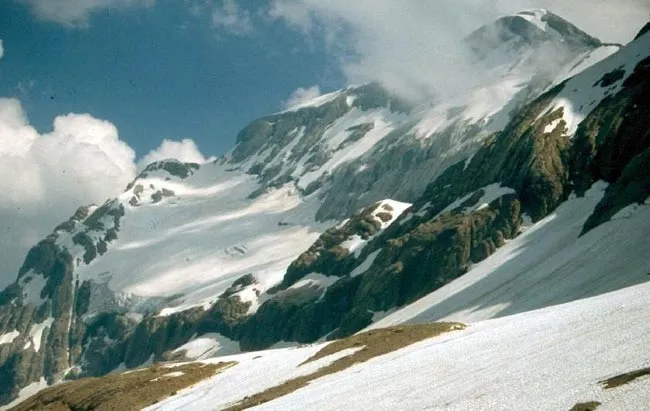
The crisp, white glaciers of the Pyrenees, the mountain range along the border between France and Spain, have substantially receded in the past 15 years and could disappear by 2050 due to global warming, a new study suggests. The retreat of glaciers in Greenland and areas like Glacier National Park have been well-documented, but less well-studied are the situations of alpine glaciers around the world. Researchers at the University of Cantabria, the Autonomous University of Madrid and the University of Valladolid compiled data from current and historic studies of the glaciers in the high mountain regions of the Iberian Peninsula to gauge how climate change has affected these icy behemoths. "High mountains are particularly sensitive areas to climate and environmental changes, and how glaciers evolve there in response to climate change is one of the most effective indicators of current global warming," said study leader Juan José González Trueba. González Trueba and his colleagues found that the steady increase in temperature — a total of 1.6 degrees Fahrenheit (0.9 degrees Celsius) since 1890 — in Spain's northern mountains indicated that the Pyrenean glaciers would disappear before 2050. There are only 21 glaciers in the Pyrenees (10 on the Spanish side and 11 on the French side) covering an area of 1.7 miles squared (4.5 kilometers squared), the researchers found. Calculations show that rapid melting over the past 15 years has caused the total regression of the smallest glaciers and a reduction of 50 to 60 percent of the surface area of the largest glaciers. The study's findings are detailed in a recent issue of the journal The Holocene.
- Video: Learn How Ice Melts
- Glaciers Disappear in Before & After Photos
- North vs. South Poles: 10 Wild Differences