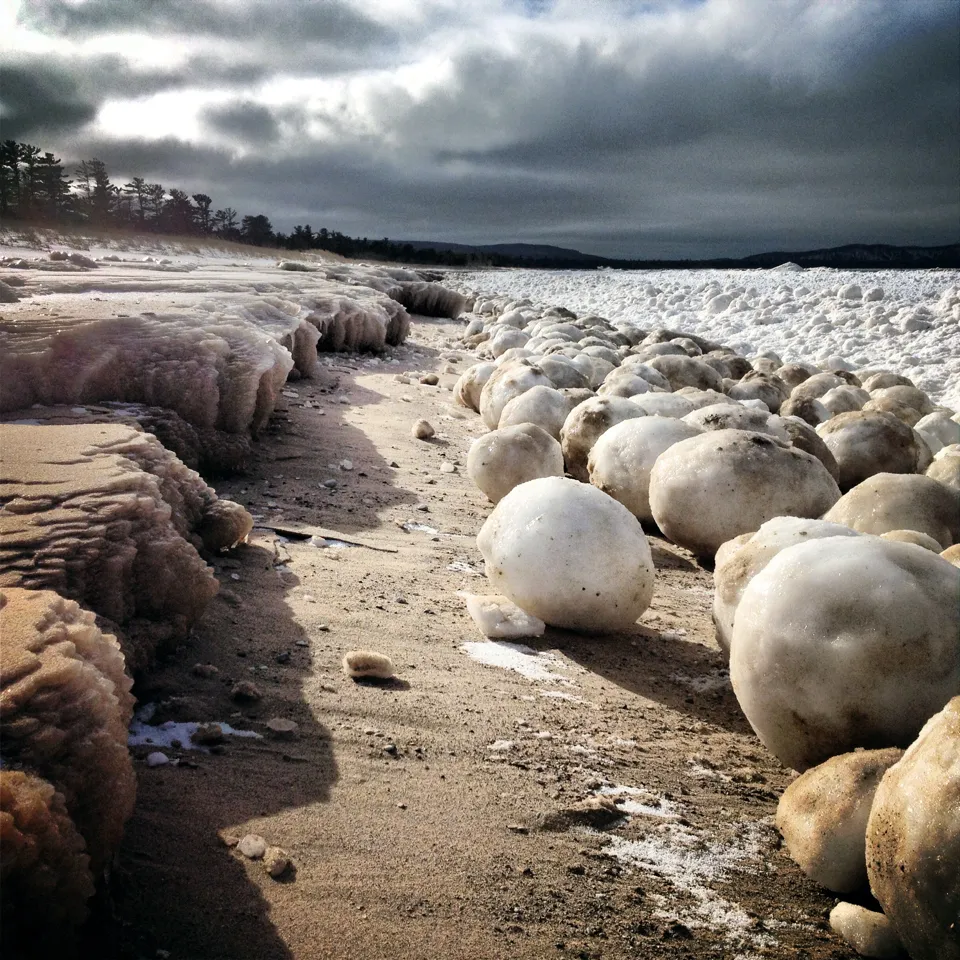
Photo: Massive Ice Balls Along Lake Michigan
Get the world’s most fascinating discoveries delivered straight to your inbox.
You are now subscribed
Your newsletter sign-up was successful
Want to add more newsletters?
Delivered Daily
Daily Newsletter
Sign up for the latest discoveries, groundbreaking research and fascinating breakthroughs that impact you and the wider world direct to your inbox.
Once a week
Life's Little Mysteries
Feed your curiosity with an exclusive mystery every week, solved with science and delivered direct to your inbox before it's seen anywhere else.
Once a week
How It Works
Sign up to our free science & technology newsletter for your weekly fix of fascinating articles, quick quizzes, amazing images, and more
Delivered daily
Space.com Newsletter
Breaking space news, the latest updates on rocket launches, skywatching events and more!
Once a month
Watch This Space
Sign up to our monthly entertainment newsletter to keep up with all our coverage of the latest sci-fi and space movies, tv shows, games and books.
Once a week
Night Sky This Week
Discover this week's must-see night sky events, moon phases, and stunning astrophotos. Sign up for our skywatching newsletter and explore the universe with us!
Join the club
Get full access to premium articles, exclusive features and a growing list of member rewards.
Floating boulders of ice the size of basketballs lined the shores of Lake Michigan last month, and were captured in a photo.
Weighing in at up to 50 pounds (22 kilograms) each, the ice spheres are a winter weather phenomenon resulting from wind and wave action along the shore, according to reporting by NASA's Earth Science Picture of the Day. Small fragments of floating ice act like seeds, with layers upon layers of supercooled lake water freezing around them as the balls churn in the waves. Wind then pushes the ice concretions onshore.
The photo, snapped on the Sleeping Bear Dunes National Lakeshore along northeastern Lake Michigan, shows enormous ice spheres lining the beach on Feb. 21.
The ice balls turn up on beaches during the winter with some regularity, but they rarely reach this size, according to Tom Ulrich, deputy superintendent for the park, the NASA site reported.
Email Becky Oskin or follow her @beckyoskin. Follow us @OAPlanet, Facebook or Google+. Original article on LiveScience's OurAmazingPlanet.
Get the world’s most fascinating discoveries delivered straight to your inbox.