 Live Science Plus





Jupiter Photos Reveal Big Changes on Giant Planet
You are now subscribed
Your newsletter sign-up was successful
Want to add more newsletters?

Delivered Daily
Daily Newsletter
Sign up for the latest discoveries, groundbreaking research and fascinating breakthroughs that impact you and the wider world direct to your inbox.

Once a week
Life's Little Mysteries
Feed your curiosity with an exclusive mystery every week, solved with science and delivered direct to your inbox before it's seen anywhere else.

Once a week
How It Works
Sign up to our free science & technology newsletter for your weekly fix of fascinating articles, quick quizzes, amazing images, and more
Delivered daily
Space.com Newsletter
Breaking space news, the latest updates on rocket launches, skywatching events and more!
Once a month
Watch This Space
Sign up to our monthly entertainment newsletter to keep up with all our coverage of the latest sci-fi and space movies, tv shows, games and books.
Once a week
Night Sky This Week
Discover this week's must-see night sky events, moon phases, and stunning astrophotos. Sign up for our skywatching newsletter and explore the universe with us!
Join the club
Get full access to premium articles, exclusive features and a growing list of member rewards.
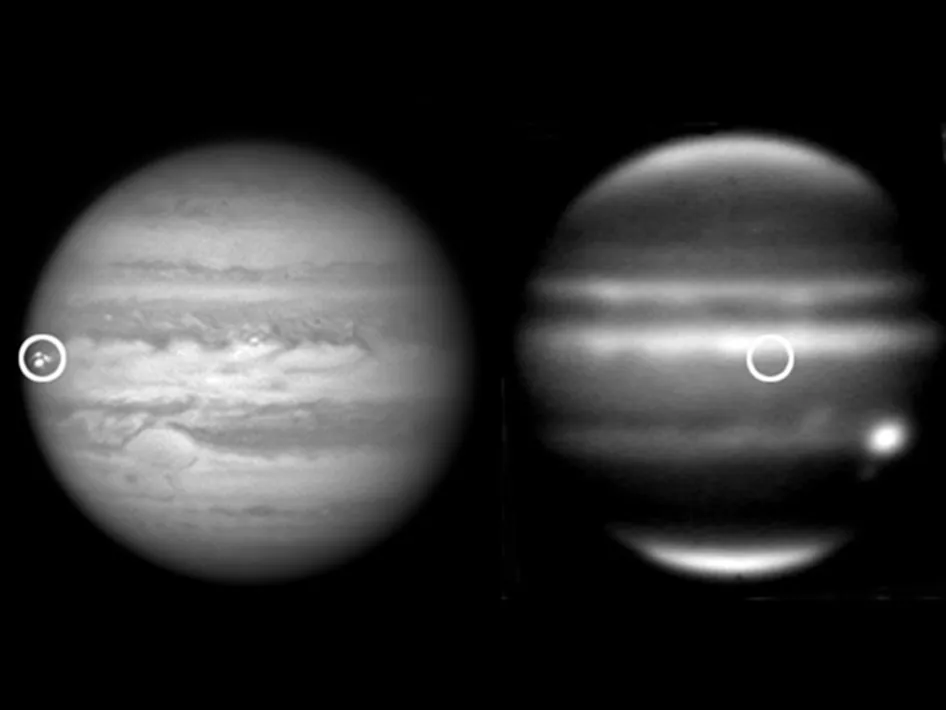
Jupiter, the largest planet in our solar system, has made some dramatic transformations in recent years, a new study reveals.
Huge belts in the giant planet's atmosphere have changed color, radiation hotspots have faded and flared up again, and cloud levels have thickened and dissolved, all while space rocks have been hurtling into it the gas giant, astronomers said.
Astronomers previously observed that from 2009 to 2011, a big brown belt just south of the equator, called the South Equatorial Belt, disappeared and returned.

Orton and his team found that in 2011 the North Equatorial Belt grew whiter than it had in a century, though it started to darken again earlier this year. And along the southern edge of this belt, the team observed infrared hotspots (which signal radiation being released from a deep layer of Jupiter's atmosphere) vanished from 2010 to 2011, but remerged by June 2012. During this period, the researchers also observed thickening of the deeper cloud decks in the northern belt, the while both the deeper and upper cloud decks of the southern belt condensed and then cleared up.
Jupiter has also suffered more impacts over the last four years than previously observed. [Surprise Impact on Jupiter (Video)]
At least three space rocks, likely less than 45 feet (15 meters) in diameter, have plunged the atmosphere, creating fireballs visible to Jupiter-watchers on the ground. The most recent asteroid strike on Jupiter hit on Sept. 10, but researchers don't believe this impact will cause any long-term disturbance on the planet.
Orton said astronomers have seen some of these changes before, "but never with modern instrumentation to clue us in on what's going on."
"Other changes haven't been seen in decades, and some regions have never been in the state they're appearing in now. At the same time, we've never seen so many things striking Jupiter," he explained in a statement. "Right now, we're trying to figure out why this is all happening."
Orton noted that the appearance of upheaval on Jupiter might be attributed to a recent flood of observations by amateur astronomers.
"It does appear that Jupiter is taking an unusual beating over the last few years, but we expect that this apparent increase has more to do with an increasing cadre of skilled amateur astronomers training their telescopes on Jupiter and helping scientists keep a closer eye on our biggest planet," Orton said.
The research was detailed today at the American Astronomical Society's Division for Planetary Sciences meeting in Reno, Nev.
This story was provided by SPACE.com, a sister site to LiveScience. Follow SPACE.com on Twitter @Spacedotcom. We're also on Facebook and Google+.

