
 Live Science Plus



Swirling Currents Fuel Huge Ocean Blooms

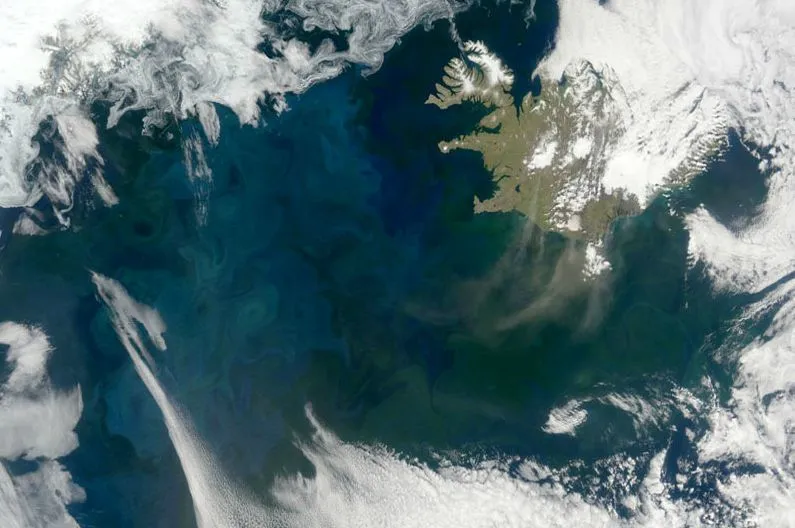
The North Atlantic is currently bursting with color as blooms of microscopic plants erupt on the surface of the chilly sea. But these expanses of plankton, which provide the basis for the area's food chain and help take in enormous quantities of the greenhouse gas carbon dioxide, wouldn't be possible without swirling currents on the surface to keep them afloat, new research finds.
These eddies, or whirlpools of water, created by wind and ocean currents, actually prompt the growth of these colorful plankton blooms, according to a study published in the July 6 issue of the journal Science.
In the North Atlantic bloom, which takes place each spring and early summer when the sun is far enough above the horizon to fuel photosynthesis, an immense number of phytoplankton burst into color, first "greening" and then "whitening" the sea as one species follows another.

"Our results show that the bloom starts through eddies, even before the sun begins to warm the ocean," study author Amala Mahadevan, an oceanographer at the Woods Hole Oceanographic Institution in Massachusetts, said in a statement.
The scientists focused on phytoplankton known as diatoms. Diatoms live in "glass houses," with walls made of silica. When conditions are right, diatom blooms spread across hundreds of miles of ocean and bring life-sustaining food to sometimes barren waters.
The newly discovered mechanism helps explain the timing of the spring plankton bloom, known to mariners and fishermen for centuries and visible in satellite images.
Phytoplankton blooms absorb about one-third of the carbon dioxide humans put into the air each year through the burning of fossil fuels. The North Atlantic is critical to this process; it's responsible for more than 20 percent of the ocean's uptake of carbon dioxide.
Follow OurAmazingPlanet on Twitter @OAPlanet. We're also on Facebook and Google+.
