
 Live Science Plus


Oldest Natural Pearl Found in Arabia
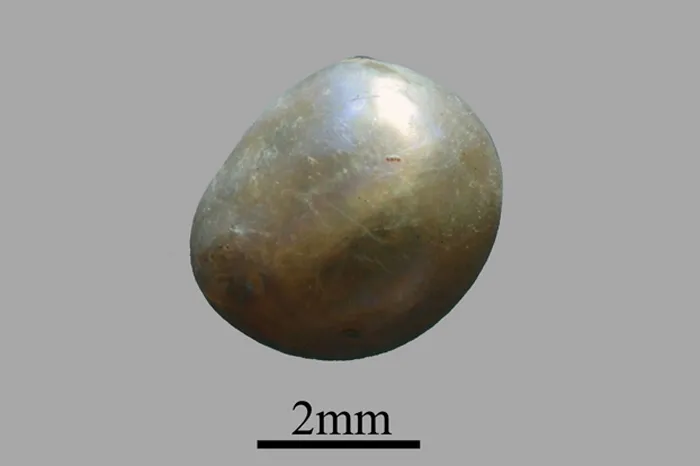
French researchers have unearthed the oldest natural pearl ever found at a Neolithic site in Arabia, suggesting that pearl oyster fishing first occurred in this region of the world.
Discovered in the Emirate of Umm al Quwain, United Arab Emirates (UAE), the pearl was believed to have originated between 5547 and 5235 BC.
"Gemmologists and jewellers have popularised the idea that the oldest pearl in the world is the 5000-year-old Jomon pearl from Japan. Discoveries made on the shores of south-eastern Arabia show this to be untrue," Vincent Charpentier, Sophie Méry and colleagues at the French Foreign Ministry's archeological mission in the UAE, wrote in the journal Arabian Archaeology and Epigraphy.
Article continues belowSome 7,500 years old and 0.07 inches in diameter, the newly discovered pearl is just the last of a series of findings at archeological sites in the Arabian Peninsula.
Over the years, researchers unearthed a total of 101 Neolithic pearls, coming from the large pearl oyster Pinctada margaritifera and from Pinctada radiata, a much smaller, easier to collect species, which provides higher quality pearls.
"The discovery of archaeological pearls demonstrates an ancient fishing tradition that no longer exists today," wrote the researchers.
Although diving for pearls was difficult and dangerous, mother-of-pearl was an important resource in the economy of local Neolithic societies, said the researchers.
Get the world’s most fascinating discoveries delivered straight to your inbox.
The large valves of P. margaritifera's were used to make fish hooks for the capture of fish as large as tuna and sharks, while spherically shaped pearls were collected for their esthetic value and for funeral rites.
Indeed, the Umm al Quwain pearl, which was not drilled, had been recovered from a grave.
According to the researchers, findings at local necropolis reveal that pearls were often placed on the deceased's face, often above the upper lip.
In the fifth millennium BC, half-drilled natural pearls were associated with men, and full-drilled pearls with women.
"In this region, pearls still hold an important place. Indeed, today they remain a central, identifying "element," the researchers wrote.
This story was provided by Discovery News.