













Fool's Gold Is the Ocean's Iron Pipeline

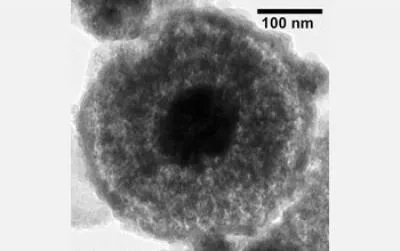
Miniscule particles of fool's gold, spewing from hydrothermal vents, fertilize the oceans with iron, new research indicates.
It's no surprise that fool's gold entered the oceans in the hot, mineral-rich water gushing from hydrothermal vents on the seafloor. However, a team of researchers found that a significant amount of these particles are so small — called nanoparticles, they have diameters one thousand times smaller than that of a human hair — they can disperse across long distances before sinking.
Technically called pyrite, fool's gold is a shiny mineral with, not surprisingly, a resemblance to gold. Because fool's gold contains iron this discovery answers an important question about how the mineral, an essential nutrient, can enter the ocean food chains far from the vents where it emerges.
Unlike other forms of iron, iron pyrite is more resistant to rust, caused when iron reacts with oxygen. This also contributes to the length of time iron pyrite stays intact and travels through the ocean.
"As pyrite travels from the vents to the ocean interior and toward the surface ocean, it oxidizes gradually to release iron, which becomes available in areas where iron is depleted so that organisms can assimilate it, then grow," said George Luther, a study researcher and professor of oceanography at the University of Delaware. "It’s an ongoing iron supplement for the ocean much as Geritol or multivitamins are for humans."
The researchers, led by Mustafa Yücel, analyzed chemicals released from two hydrothermal vent fields in the Pacific Ocean: the East Pacific Rise and the Eastern Lau Spreading Center.
The research appeared online May 8 in the journal Nature Geoscience.
Get the world’s most fascinating discoveries delivered straight to your inbox.
You can follow LiveScience writer Wynne Parry on Twitter @Wynne_Parry. Follow LiveScience for the latest in science news and discoveries on Twitter @livescience and on Facebook.
