Asteroid the size of the Golden Gate Bridge will whiz past Earth in March
Don't panic; it won't get that close.
Get the world’s most fascinating discoveries delivered straight to your inbox.
You are now subscribed
Your newsletter sign-up was successful
Want to add more newsletters?
Delivered Daily
Daily Newsletter
Sign up for the latest discoveries, groundbreaking research and fascinating breakthroughs that impact you and the wider world direct to your inbox.
Once a week
Life's Little Mysteries
Feed your curiosity with an exclusive mystery every week, solved with science and delivered direct to your inbox before it's seen anywhere else.
Once a week
How It Works
Sign up to our free science & technology newsletter for your weekly fix of fascinating articles, quick quizzes, amazing images, and more
Delivered daily
Space.com Newsletter
Breaking space news, the latest updates on rocket launches, skywatching events and more!
Once a month
Watch This Space
Sign up to our monthly entertainment newsletter to keep up with all our coverage of the latest sci-fi and space movies, tv shows, games and books.
Once a week
Night Sky This Week
Discover this week's must-see night sky events, moon phases, and stunning astrophotos. Sign up for our skywatching newsletter and explore the universe with us!
Join the club
Get full access to premium articles, exclusive features and a growing list of member rewards.
An asteroid as wide as the Golden Gate Bridge is long will hurtle past Earth next month. But although it will be the biggest and speediest asteroid to fly by our planet this year, there's no reason to panic.
The space rock, officially called 231937 (2001 FO32), is about 0.5 to 1 mile (0.8 to 1.7 kilometers) in diameter and will come within 1.25 million miles (2 million kilometers) of Earth at 11:03 a.m. EST (1603 GMT) on March 21 — close enough and large enough to be classified as "potentially hazardous," according to a database published by NASA's Jet Propulsion Laboratory.
An asteroid is designated as "potentially hazardous" when its orbit intersects with Earth's at a distance of no more than about 4.65 million miles (7.5 million km) and it is bigger than about 500 feet (140 meters) in diameter, according to NASA's Center for Near-Earth Object Studies (CNEOS).
Related: The 7 strangest asteroids: Weird space rocks in our solar system
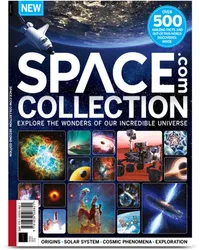
Space.com Collection: $26.99 at Magazines Direct
Get ready to explore the wonders of our incredible universe! The "Space.com Collection" is packed with amazing astronomy, incredible discoveries and the latest missions from space agencies around the world. From distant galaxies to the planets, moons and asteroids of our own solar system, you’ll discover a wealth of facts about the cosmos, and learn about the new technologies, telescopes and rockets in development that will reveal even more of its secrets.
Small asteroids pass between Earth and the moon several times a month, and their fragments enter and break up in Earth's atmosphere almost daily, according to NASA's Planetary Defense Coordination Office (PDCO).
Telescopes in New Mexico that are part of the Lincoln Near-Earth Asteroid Research (LINEAR) program — an MIT Lincoln Laboratory program funded by the U.S. Air Force and NASA — detected the asteroid on March 23, 2001, according to EarthSky. Observatories have monitored it ever since. Scientists used these observations to calculate the asteroid's orbit and determine how close the space rock will come to Earth when it whizzes by at almost 77,000 mph (124,000 km/h).
No known asteroid poses a significant risk to Earth for the next 100 years. The current biggest known threat is an asteroid called (410777) 2009 FD, which has a 1 in 714 (less than 0.2%) chance of hitting Earth in 2185, according to NASA's PDCO.
Get the world’s most fascinating discoveries delivered straight to your inbox.
NASA is studying methods of deflecting asteroids that do end up on a collision course with Earth, such as by using the gravity of a flying spacecraft to slowly pull asteroids off their trajectory to a safe distance, according to NASA's PDCO.
If you have a telescope with an aperture of at least 8 inches (20 centimeters), you might be able to spot the fast-moving space rock, according to EarthSky. To catch a glimpse in the southern U.S., point your telescope south-southeast between the constellations of Sagittarius and Corona Australis at 4:45 a.m. EST on March 20.
Originally published on Live Science.


Patrick Pester is the trending news writer at Live Science. His work has appeared on other science websites, such as BBC Science Focus and Scientific American. Patrick retrained as a journalist after spending his early career working in zoos and wildlife conservation. He was awarded the Master's Excellence Scholarship to study at Cardiff University where he completed a master's degree in international journalism. He also has a second master's degree in biodiversity, evolution and conservation in action from Middlesex University London. When he isn't writing news, Patrick investigates the sale of human remains.