Live Science Plus




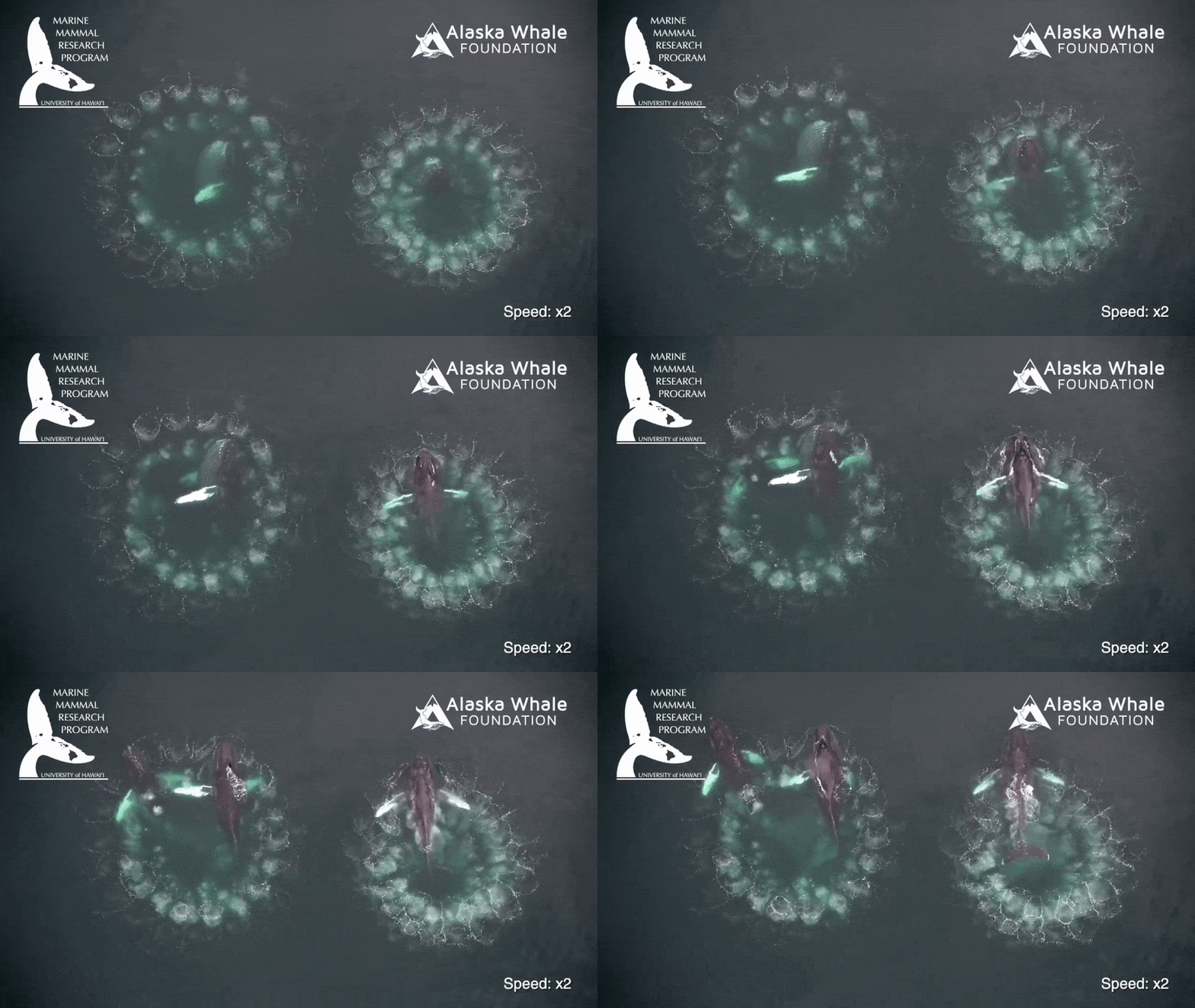
Blowing bubbles at the dinner table is generally considered to be very bad manners by human standards. But for humpback whales, it's a necessary part of trapping their dinner; humpbacks blow streams of spiraling bubbles to form "nets" of air around groups of the tiny marine creatures that the whales eat.
Recently, researchers captured rare footage of this incredible sight, using cameras flying overhead and attached to feeding whales in waters near southeastern Alaska.
Airborne drone cameras hovering over humpback whales peered down at bubble trails as they rose up through the water, producing circular pens. At the same time, cameras worn by the whales showed what the net-building looked like from below the water's surface. As the whales exhaled bubbles, the animals swam in circles around their prey, creating an enclosing bubble wall to trap small fish and crustaceans, representatives of the University of Hawai'i (UH) at Mānoa said in a statement.
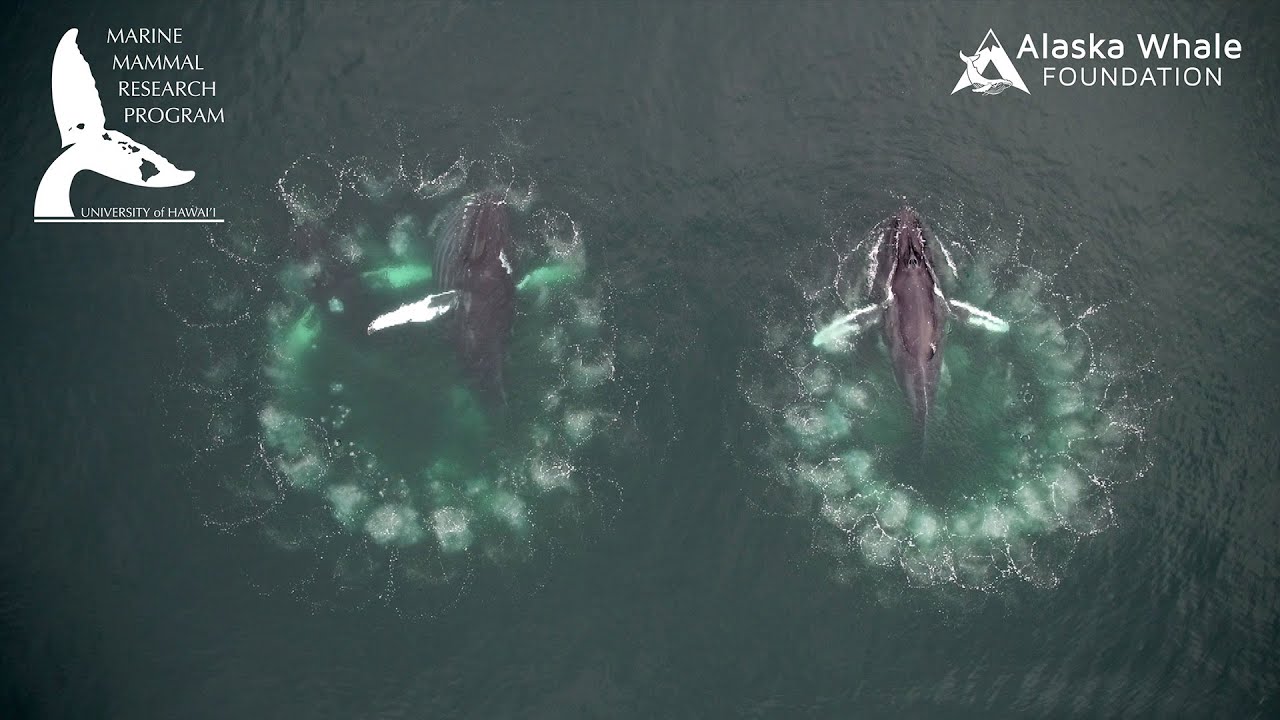
Once a bubble net surrounded the prey, the whale would swim through the net's center and gulp down anything caught inside.
"The footage is rather groundbreaking," said Lars Bejder, director of the Marine Mammal Research Program at UH. "We're observing how these animals are manipulating their prey and preparing the prey for capture," he said in the statement.
Using suction cups, the researchers equipped whales with tags that held a video camera and accelerometer — instruments that measured the whales' acceleration — for gathering data about the movements in the whales' bubble-producing ballet. Together with the drones, the cameras provided the scientists with exceptional views of the whales as they generated prey-trapping bubble nets.
"The drone's perspective is showing us these bubble nets and how the bubbles are starting to come to the surface and how the animals come up through the bubble net as they surface, while the cameras on the whales are showing us the animal's perspective," Bejder said. "So, overlaying these two data sets is quite exciting."
Every summer, approximately 3,000 humpback whales in Hawai'i migrate around 3,000 miles (4,800 kilometers) north to Alaska, to gorge themselves where food is plentiful. Months later, at summer's end, the sated whales travel back to waters near Hawai'i, where the females give birth and nourish their offspring, the researchers said in the statement.
Scientists said they anticipate that findings from this mesmerizing bubble-blowing behavior will provide insights on how whales interact with their habitats. The footage and data could also reveal how humpbacks may be affected as climate change drives shifts in prey distribution and abundance, the researchers said. In addition, their observations could help explain why some humpback populations may already be declining, according to the statement.
- In Photos: Tracking Humpback Whales
- Whale Album: Giants of the Deep
- Images: Sharks & Whales from Above
Originally published on Live Science.