 Live Science Plus





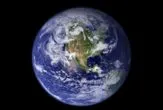
Extra precipitation expected as a result of global warming could create a lopsided world in which sea ice increases around the South Pole while the far north melts away.
A new study illustrates the difficulty in predicting how the planet might react to overall warming, which most but not all scientists believe is underway, in part due to greenhouse gas emissions by industry and autos.
"Most people have heard of climate change and how rising air temperatures are melting glaciers and sea ice in the Arctic," said Dylan Powell of the University of Maryland Baltimore County. "However, findings from our simulations suggest a counterintuitive phenomenon. Some of the melt in the Arctic may be balanced by increases in sea ice volume in the Antarctic."
Article continues belowPowell, a doctoral student, is lead author of a paper describing the results in this month's Journal of Geophysical Research (Oceans).
Powell and his colleagues used satellite data from NASA's Special Sensor Microwave/Imager to study snow depth on sea ice. The data allowed "more stable and realistic precipitation data" to be fed into computer models that project changes around the globe.
"On any given day, sea ice cover in the oceans of the polar regions is about the size of the United States," said Thorsten Markus, a co-author of the paper and a research scientist at NASA's Goddard Space Flight Center. "Far-flung locations like the Arctic and Antarctic actually impact our temperature and climate where we live."
Polar sea ice formation and climate patterns drive large ocean circulation currents, which in turn affect local climates at moderate latitudes where most people live. A warmer world should fuel more precipitation, most experts agree.
For Antarctica, the new study concludes, the extra precipitation will mean deeper snow, which will suppress sea ice below, making it thicker over time.
The idea runs counter to a study earlier this year that found glaciers in part of Antarctica are melting rapidly.
"We used computer-generated simulations to get this research result," Powell cautioned. "I hope that in the future we'll be able to verify this result with real data through a long-term ice thickness measurement campaign."
Related Stories
- 125 Large Northern Lakes Disappear
- How Global Warming is Changing the Wild Kingdom
- Space Ring Could Shade Earth and Stop Global Warming
- Climates North and South of Equator Said Linked
- Surprising Side Effects of Global Warming
Good luck ...

Top 10 Ways
to Destroy Earth

