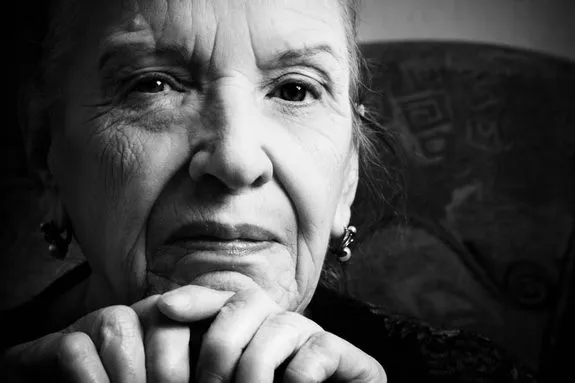
Do people really die of old age?
Get the world’s most fascinating discoveries delivered straight to your inbox.
You are now subscribed
Your newsletter sign-up was successful
Want to add more newsletters?
Delivered Daily
Daily Newsletter
Sign up for the latest discoveries, groundbreaking research and fascinating breakthroughs that impact you and the wider world direct to your inbox.
Once a week
Life's Little Mysteries
Feed your curiosity with an exclusive mystery every week, solved with science and delivered direct to your inbox before it's seen anywhere else.
Once a week
How It Works
Sign up to our free science & technology newsletter for your weekly fix of fascinating articles, quick quizzes, amazing images, and more
Delivered daily
Space.com Newsletter
Breaking space news, the latest updates on rocket launches, skywatching events and more!
Once a month
Watch This Space
Sign up to our monthly entertainment newsletter to keep up with all our coverage of the latest sci-fi and space movies, tv shows, games and books.
Once a week
Night Sky This Week
Discover this week's must-see night sky events, moon phases, and stunning astrophotos. Sign up for our skywatching newsletter and explore the universe with us!
Join the club
Get full access to premium articles, exclusive features and a growing list of member rewards.
There are various ways of shuffling off this mortal coil, but people actually die from injury (such as a fall or car accident) or disease (such as cancer). No one dies of old age. Usually when a person is said to have died "of old age," it means that he or she succumbed to one of the diseases common in our later years, experts told Gizmodo.
While many older people do suffer from health problems, disease does not automatically accompany aging, and seniors are living longer and healthier than ever. Just as youth does not guarantee good health, old age does not guarantee poor health, according to the National Institutes of Health (NIH) National Institute on Aging.
It is true that living cells have a finite life span, but that doesn't mean that the organism simply dies because the cells are old. Instead, genetic mutations, diseases, and damaging effects of the environment can foster a specific disorder or disease, ABC Health & Wellbeing reported. As people get older, their cells simply don't work as well, and can't stave off disease as easily or heal as well as they once could. As a result, older people may die from injuries or diseases that a younger person would easily survive.
But nothing dies from simply being old.
Follow Life's Little Mysteries on Twitter @llmysteries. We're also on Facebook & Google+.
Get the world’s most fascinating discoveries delivered straight to your inbox.