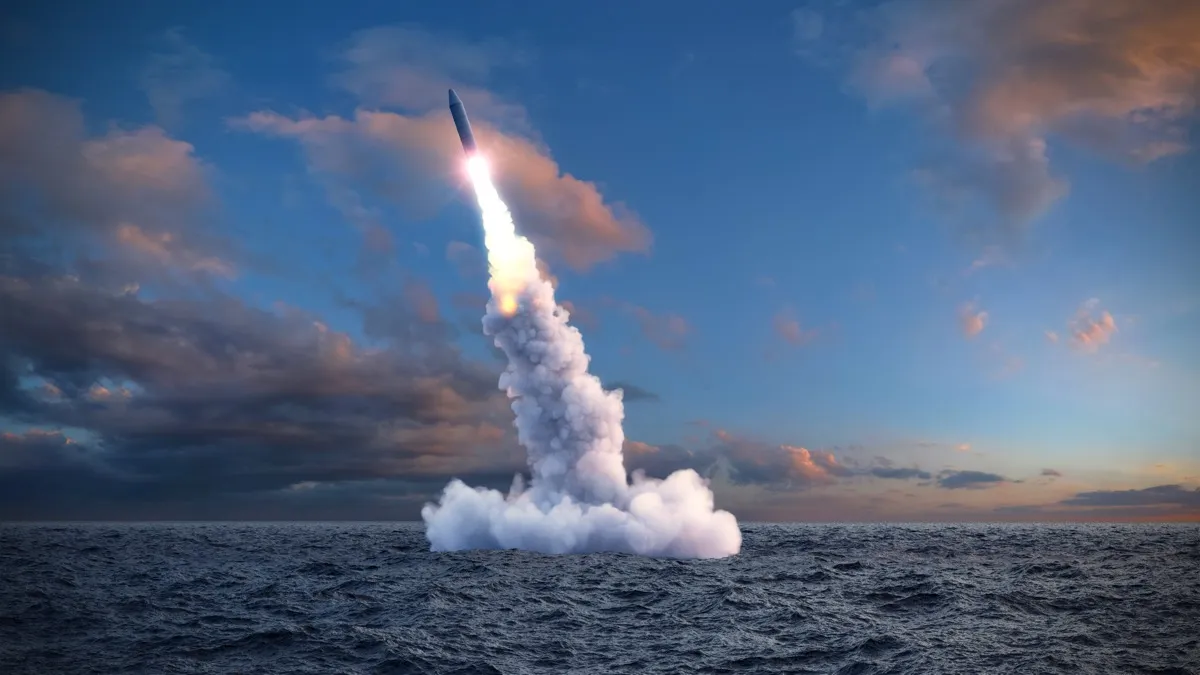
If you were told to take cover because of an incoming nuclear ballistic missile, would you seriously know what to do? (Or would you run around frantically or ball up in a fetal position?)
Many people in Hawaii faced that very question on Jan. 13, 2018. That morning, at 8:07 a.m. local time, the Hawaii Emergency Management Agency sent out an alert advising residents to seek shelter from an incoming ballistic missile.
Unbeknownst to just about everyone at the time, however, the alert was a false alarm. Even the operator who sent out the alarm, issued over text messages and on TV and radio stations, thought it was real. But it was accidentally sent out during a shift change, and the incoming operator didn't realize that the alert was part of a preparedness drill. [How Do Intercontinental Ballistic Missiles Work?]
Though it was an error, the alert revealed that Americans aren't prepared for an attack and that public health officials need to improve their messaging, according to the Centers for Disease Control and Prevention; the CDC came to their conclusion after reviewing relevant Twitter responses posted during the 38-minute period before the alert was retracted and the 38 minutes afterward.
Those tweets revealed a lot of confusion and fear, the researchers said. Here's a taste of the tweets (the researchers analyzed 5,880 posts):
- "Sirens going off in Hawaii, ballistic missile threat issued. What's happening?"
- "Idk [I don't know] what's going on ... but there's a warning for a ballistic missile coming to Hawaii? [expletive deleted]"
- "Just got an iPhone alert of inbound balistic [ballistic] missile in Hawaii. Said Not a Drill. @PacificCommand @DefenseIntel @WHNSC"
- "there's a missile threat here right now guys. I love you all and I'm scared as [expletive deleted]"
- "Woke up and started crying after seeing the Hawaii missile alert. Called my parents and balled [bawled] my eyes out because I was so worried."
After people found out that the terrifying alert was a mistake, Twitter again blew up. This time, the posts revealed anger at the alert, along with more confusion and mistrust of the government:
- "How do you 'accidentally' send out a whole [expletive deleted] emergency alert that says there's a missile coming to Hawaii and to take cover. AND TAKE THIRTY MINUTES TO CORRECT?!?"
- "To the person in #Hawaii who sent out that false alarm alert message about missile attack TO EVERY [expletive deleted] CELL PHONE … MOVE TO ANTARCTICA NOW! ... #that [expletive deleted] scared everyone @Hawaii_EMA"
- "Can you imagine waking up to an alert that says, "Take shelter there is a missile on the way" like Bruh. What shelter is there for a missile? That [expletive deleted] might as well say, "Aye Bruh. Missile on the way. Good luck"
- "@Hawaii_EMA We all need to know who is behind this!!!. This is not a joke. . How can we trust the emergency alarm now? #hawaii #missile"
The report not only revealed some holes in Hawaii's dissemination process for such alerts and "all clear" messages, but also showed that the message lacked instructions.
If or when a real alert goes out, the CDC researchers suggested, it "should include clear instructions for persons in the affected area to carry out during an emergency."
(Interestingly, the CDC almost gave a talk last year — scheduled for Jan. 16, 2018 — about what people should do in the event of a nuclear detonation. But the agency canceled that talk to instead discuss the severe flu season.)
Still, the CDC does have some guidelines online for "radiation emergencies" if you're interested in being in the know. (Hint: You should go indoors and stay there.)
- Top 10 Ways to Destroy Earth
- The 22 Weirdest Military Weapons
- Doom and Gloom: Top 10 Post-Apocalyptic Worlds
Originally published on Live Science.
