














Most Americans Say Kids Should Get Vaccinated, Poll Finds

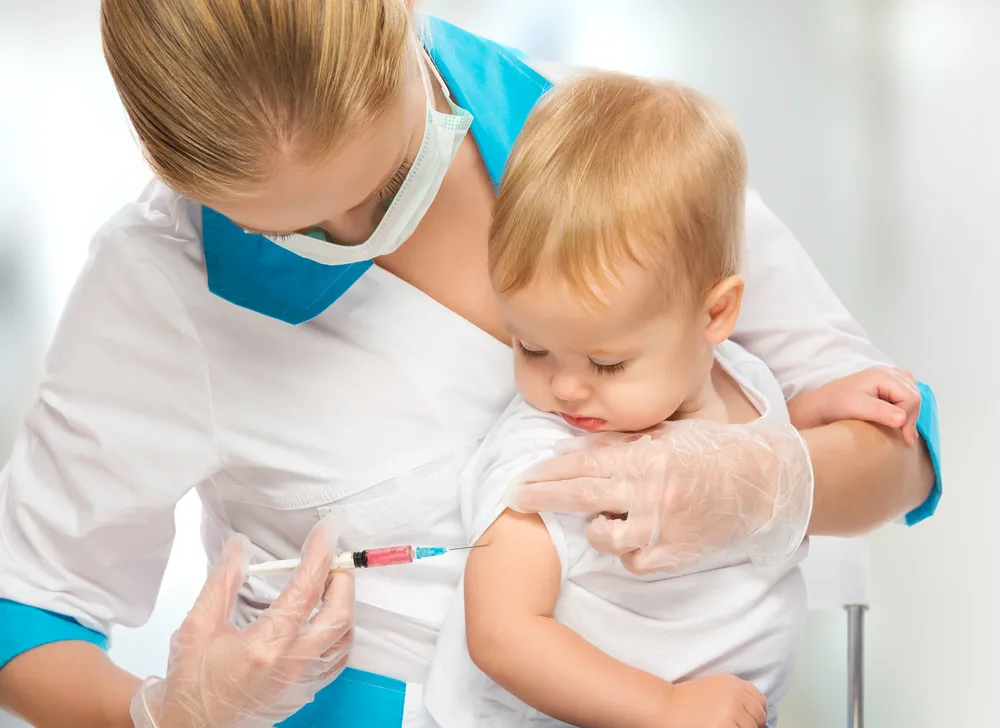
Most Americans think vaccines are beneficial for health, and that children should be required to get them, according to a new poll.
The poll, from Pew Research Center, found 82 percent of U.S. adults say healthy children should be required to get the measles, mumps and rubella (MMR) vaccine in order to attend school, while just 17 percent say parents should be able to decide not to vaccine their kids.
In addition, nearly three-quarters of respondents (73 percent) rated the health benefits of the MMR vaccine as "high" or "very high," while just 7 percent rated the benefits as "low." Overall, 88 percent of Americans said the benefits of the MMR vaccine outweigh the risks, the poll found. [Just How Safe Are Vaccines? Here Are the Numbers]
Still, parents with young children were slightly more concerned about the safety of the MMR vaccine. The poll found that about 43 percent of parents with children ages 0 to 4 years rated the risks of the MMR vaccine as "medium" or "high," compared with 29 percent of parents with no children under 18.
Some reports have found that people in more affluent communities are less likely to vaccinate their children, which has led to speculation that people with higher incomes are more concerned about vaccine safety, Pew said. But the new poll found people with higher incomes tended to have a positive view of vaccines — 97 percent of those with a family income of $100,000 a year or more said that the benefits of the MMR vaccine outweigh the risks, and 78 percent rated the risks of the vaccine as low.
Among those with a family income of less than $30,000 a year, 60 percent rated the risks of the MMR vaccine as low, and 79 percent said the benefits outweigh the risks.
The poll also looked at Americans' views on the MMR vaccine among different ideologies. It found that 25 percent of people who identify as conservative said that parents should be able to decide not to vaccine their children, compared with 15 percent of people who identify as moderate, and 9 percent of people who identify as liberal. Still, the majority of conservatives (73 percent) said that healthy children should be required to get the MMR vaccine to attend school, and 90 percent of liberals agreed with this statement.
Get the world’s most fascinating discoveries delivered straight to your inbox.
Historically, some people with concerns about vaccines have cited a now-widely discredited study linking the MMR vaccine to autism. There are now more than 20 rigorous scientific studies that have failed to find a link between the MMR vaccine and autism, and the original study was retracted, according to the Centers for Disease Control and Prevention.
The poll results are based on interviews with 1,549 Americans ages 18 or older, which took place from May to June 2016. The survey sample is nationally representative, and the poll's margin of error is 4 percent, Pew said.
Original article on Live Science.

Rachael is a Live Science contributor, and was a former channel editor and senior writer for Live Science between 2010 and 2022. She has a master's degree in journalism from New York University's Science, Health and Environmental Reporting Program. She also holds a B.S. in molecular biology and an M.S. in biology from the University of California, San Diego. Her work has appeared in Scienceline, The Washington Post and Scientific American.