How many navies does it take to shoot down one ballistic missile? Only nine.
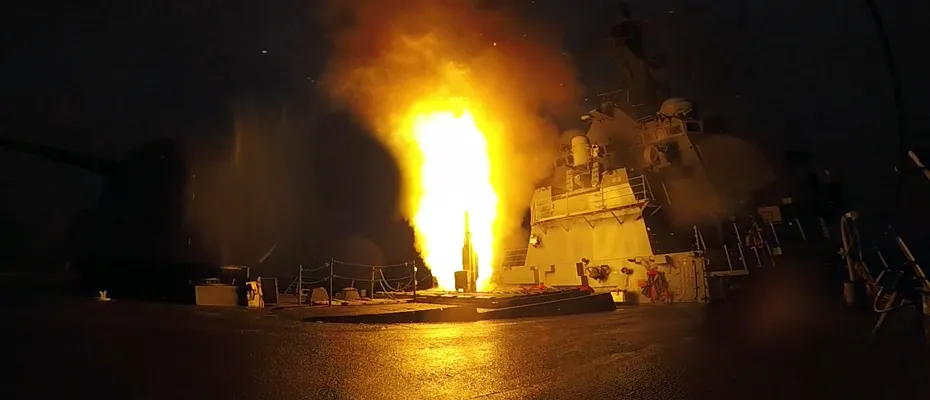
On Oct. 20, naval armed forces from nine different nations teamed up to shoot down a mock ballistic missile high above Earth's atmosphere. The fiery interception was part of a demonstration by the Maritime Theater Missile Defense (MTMD) Forum, an organization established in 1999 to promote cooperation among allied navies and to facilitate the coordination of sea-based defense systems.
The demonstration, which was conducted in the North Atlantic Ocean, off the coast of Scotland, was an opportunity for allied navies to test out the Aegis Combat System. Developed in the United States, Aegisuses advanced technology and radar to track and destroy enemy missiles. Originally used exclusively by the U.S. Navy, Aegis is now used by five other navies worldwide. [7 Technologies That Transformed Warfare]
Latest Videos FromLive Science
During the demonstration, warships from the U.S., Spain and Norway teamed up to destroy one ballistic missile, as well as two anti-ship cruise missiles that were fired from the Hebrides Range, a missile test range on the northwest coast of Scotland.
The test marked a lot of firsts. It was the first time a Standard Missile-3 (SM-3) Block IA guided interceptor (essentially, a high-speed rocket without explosives) was fired from a non-U.S. range and the first time that a Standard Missile-2 (SM-2) was fired from Scotland's Hebrides Range. It was also the first time that a ballistic missile threat was intercepted over Europe.
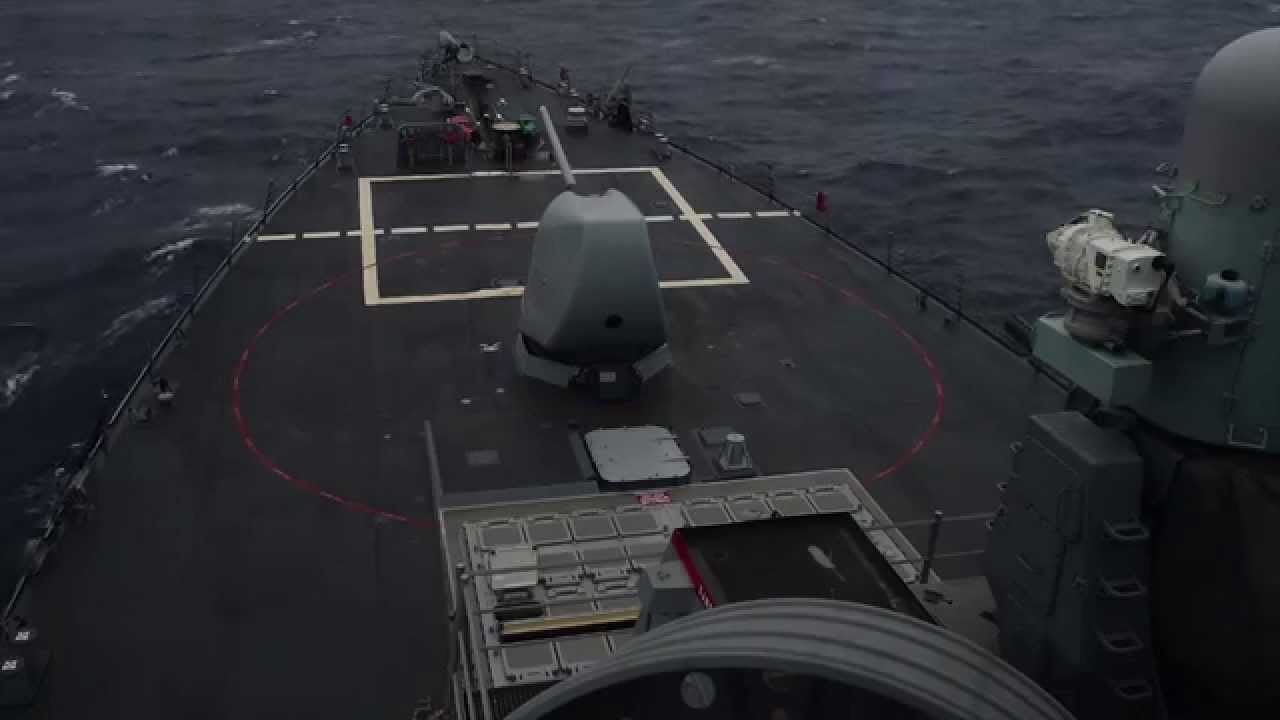
The guided interceptor that blew up the mock ballistic missilewas fired from the USS Ross, a U.S. destroyer specifically designed to take out missile threats. Another U.S. ship, the USS The Sullivans, destroyed the other two missile targets.
In addition to the Aegis-equipped ships from Spain and Norway, the U.S. Navy was joined by ships, aircraft and personnel from Canada, France, Italy, the Netherlands, the United Kingdom and Germany. The only member of the MTMD Forum that missed out on all the action was Australia.
The demonstration was a way for allied navies to "practice unified, decisive and timely command and control," Vice Adm. James Foggo, commander of the U.S. 6th Fleet, said in a statement ahead of the demonstration, according to the U.S. Naval Institute.
Other ballistic missile detection exercises are expected to take place in the coming weeks, as part of a series of practice runs by members of the MTMD Forum.
Follow Elizabeth Palermo @techEpalermo. Follow Live Science @livescience, Facebook & Google+. Original article on Live Science.