














Turkey Talk: Anatomy of the Bird at the Center of the Feast
Steve Zack is coordinator of Bird Conservation for the Wildlife Conservation Society (WCS). He contributed this article to Live Science's Expert Voices: Op-Ed & Insights.
Thanksgiving is upon us, as families and friends gather for food, drink and conversation. The latter can be fraught with risk, of course — politics and religion have long been out of the question, and this year football divides those obsessed with fantasy drafts and those grounded by the game's toll on heads and bodies.
Here's a suggestion for a safer alternative: Talk turkey.
Physiology of the feast
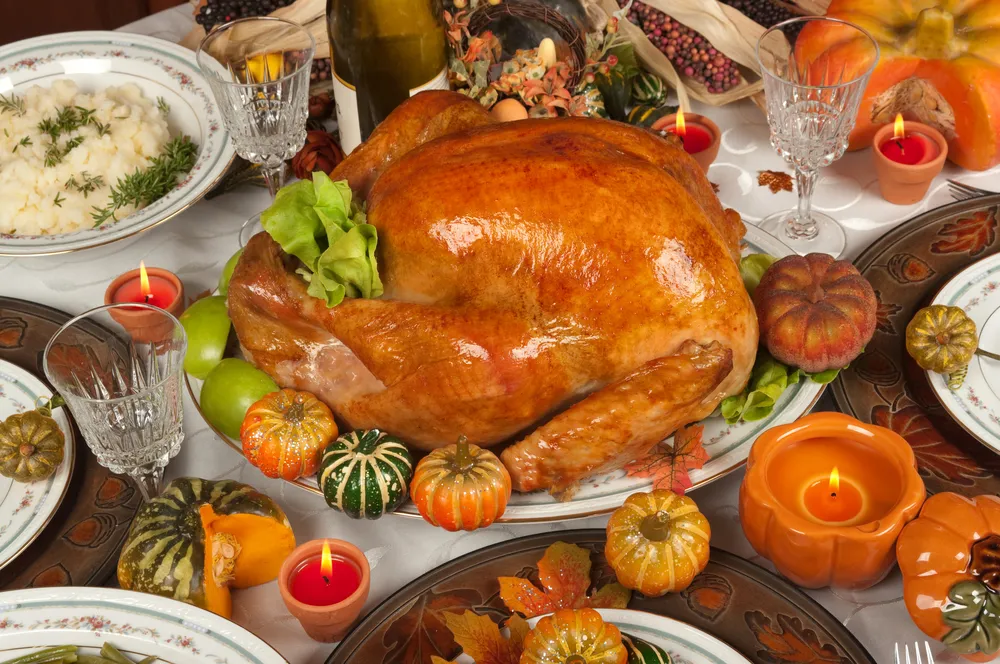
Thanksgiving cutting boards hold the centerpiece of our beloved autumn feast. But look closer, and you will find skeletal and muscular adaptations for flight forged over millions of years of evolution. Before we begin, it is worth a gentle reminder for those who are not hunters (traditional or urban hipster) that the turkey in front of us once had a head, feet, and feathers — now discarded along with most of the innards.
What remains are the exposed workings of a highly aerobic flying machine — the turkey's flights taking place in short, powerful bursts. If you are eating a factory-bred variety with a breast supersized for your gastronomical pleasure, rest assured that the anatomy of flight is in place even if the capacity is limited. [Thanksgiving Myth Busted: Eating Turkey Won't Make You Sleepy ]
The basic framework of the turkey resembles our own: backbone, long limb bones like the femur, a rib cage, etc., for the attachment and work of muscles. Yet compared to mammals like us, the bones are light and hollow, with considerable fusion — particularly in the pelvis, the back, and tail vertebrae (called the pygostyle), and at the end of the wing among the digits.
Get the world’s most fascinating discoveries delivered straight to your inbox.
The fusion of the backbone provides the strut of the avian flying machine: the chest plate (or sternum) and its keel where the major flight muscles reside. The keel exists in birds, not mammals, and provides more surface area for attachment of flight muscles.
The clavicles are fused and called the furcula, popularly known as the wishbone. The wishbone acts like a spring to maintain the symmetry of wing beats as it braces the shoulders.
The keeled sternum and furcula help connect the mechanics of flight with the respiratory and energy demands of powering flight. We mammals inefficiently mix oxygenated and de-oxygenated air in our lungs with inspiration and expiration. Bird flight , by contrast, uses an amazing one-way airflow across the lungs that does not rely on a diaphragm. Evolution and the demanding requirements of flight resulted in the development of a series of air sacs and connected hollow bones that create unidirectional airflow across the rigid lungs of birds with no mixing of de-oxygenated air.
The sternum acts as a pump and the furcula a spring, creating a bellows-system moving air to air sacs and then to the lung. The wing muscles move the sternum elliptically, creating the pump-like action with the furcula as both move air flow (and pressure) in and out of the air sacs. Flight as inspiration, literally!
The meat of the matter
Finally, there are reasons why turkeys have white and dark meat that relate to the flight of fowl. In these birds, the most active muscles are in the legs. Turkeys walk, run, and strut far more than they fly. When turkeys do go aloft, it is not in sustained flights like most other birds, but rather in sudden bursts of short duration.

Blood vessels of the leg and thigh muscles contain myoglobin, which constantly delivers oxygen from the lungs. The more myoglobin, the darker the muscle (and hence the meat). In contrast, the breast muscle is filled with the carbohydrate glycogen, which provides energy for sudden bursts of flight but quickly depletes, requiring time for replenishment.
The different makeup of dark and white muscles leads to their different cooking times. White meat is best at 155° Fahrenheit. Any hotter risks a cooked bird in which the meat is too dry. Dark meat takes longer to cook to reach its best taste and avoid chewiness at about 180°F. One simple solution: cover the breast with an ice pack while the rest of the bird comes to room temperature before cooking.
Now, please pass the turkey. Discussion over. It is time to give thanks for our sumptuous meal and the miracle of flight. And when the furcula has dried and is ready for tugging, please consider a simple wish for the conservation of nature and the astonishing world of form and function.
Follow all of the Expert Voices issues and debates — and become part of the discussion — on Facebook, Twitter and Google+. The views expressed are those of the author and do not necessarily reflect the views of the publisher. This version of the article was originally published on Live Science.