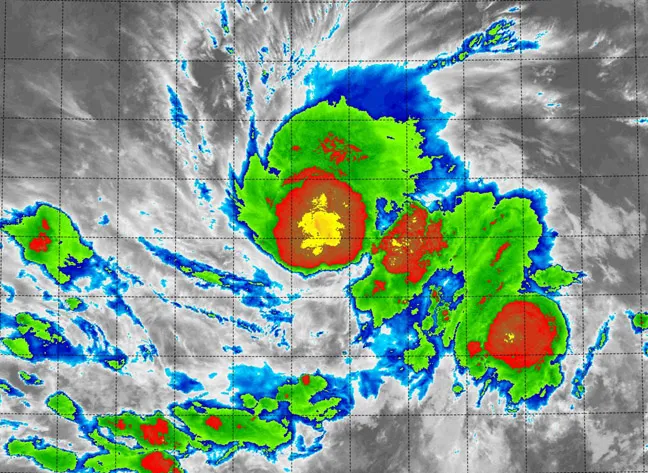
Spooky Storm Spotted in Pacific Ocean (Photo)
Get the world’s most fascinating discoveries delivered straight to your inbox.
You are now subscribed
Your newsletter sign-up was successful
Want to add more newsletters?
Delivered Daily
Daily Newsletter
Sign up for the latest discoveries, groundbreaking research and fascinating breakthroughs that impact you and the wider world direct to your inbox.
Once a week
Life's Little Mysteries
Feed your curiosity with an exclusive mystery every week, solved with science and delivered direct to your inbox before it's seen anywhere else.
Once a week
How It Works
Sign up to our free science & technology newsletter for your weekly fix of fascinating articles, quick quizzes, amazing images, and more
Delivered daily
Space.com Newsletter
Breaking space news, the latest updates on rocket launches, skywatching events and more!
Once a month
Watch This Space
Sign up to our monthly entertainment newsletter to keep up with all our coverage of the latest sci-fi and space movies, tv shows, games and books.
Once a week
Night Sky This Week
Discover this week's must-see night sky events, moon phases, and stunning astrophotos. Sign up for our skywatching newsletter and explore the universe with us!
Join the club
Get full access to premium articles, exclusive features and a growing list of member rewards.
Just in time for Halloween, a spooky set of thunderstorms passed over the Eastern Pacific Ocean today (Oct. 31).
NASA's Terra satellite spotted the ominous brew around midnight Eastern Time. A storm cluster that resembled a jack-o'-lantern with a stem can be seen in the false-color weather image, which highlights the towering clouds.
The weather system is part of Tropical Storm Vance, which is about 450 miles (720 kilometers) south of Acapulco, Mexico. The rare November tropical storm is expected to strengthen into a hurricane by Sunday, NASA said in a statement. Vance is the 20th named storm and would be the 13th hurricane of the season in the Eastern Pacific. Typically, there are no hurricanes in November in the Eastern Pacific, according to statistics from the National Hurricane Center.
Follow Becky Oskin @beckyoskin. Follow LiveScience @livescience, Facebook & Google+. Originally published on Live Science.
Get the world’s most fascinating discoveries delivered straight to your inbox.