













Tesla Museum Sparks 'Buy a Brick' Crowdfunding Campaign

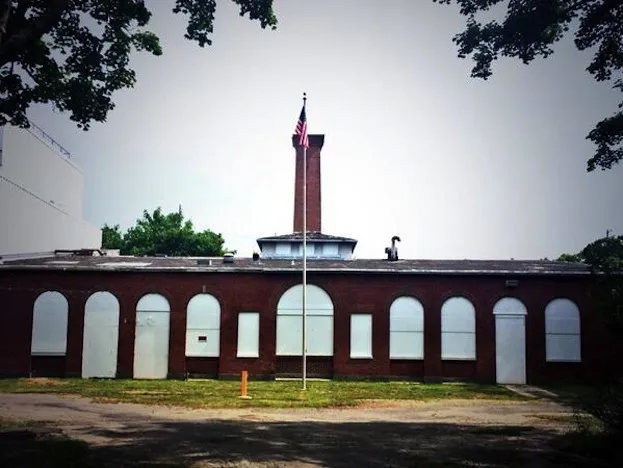
Your dollars could quite literally pave the way to a Nikola Tesla museum.
A group that's restoring the inventor's Wardenclyffe lab in Shoreham, New York, is selling engraved bricks to fund a museum at the site.
With help from Matthew Inman — the man behind the popular Web comic "The Oatmeal" — the Tesla Science Center launched the crowdfunding campaign on Indiegogo yesterday (Sept. 24). [See photos of Tesla's lab at Wardenclyffe]
The cheapest personalized bricks are being sold for $125, and $1,200 will get you a four-brick array. The organizers set a goal of raising $200,000 by Nov. 8. But lucky for them, Tesla, though he's been dead for more than 70 years, has a fervent fan base. As of this afternoon (Sept. 25), the campaign had pulled in more than $130,000.
"Isn't this fantastic?" Jane Alcorn, president of the Tesla Science Center, told Live Science in an email. "Over 30 countries so far will be represented by contributors to the brick campaign."
The group says $200,000 will be enough to make some crucial improvements and repairs to Tesla's red brick lab (which also has the distinction of being architect Stanford White's last project before he was murdered.) If the campaign continues strongly enough, the Tesla Science Center will be able to use extra funds to make additional improvements to the grounds, Alcorn said.
Ultimately, the Tesla Science Center says it needs to raise close to $10 million to complete the entire project. But, the group has been successful at drawing big donations. A past Indiegogo campaign helped the Tesla Science Center buy the property in 2012. (With an original goal of $850,000, the group raised more than $1.3 million during that effort.) In honor of Tesla's 158th birthday in July, billionaire entrepreneur Elon Musk pledged $1 million to the creation of the museum. Musk, who also founded the spaceflight company SpaceX, named his electric car company after Tesla.
Get the world’s most fascinating discoveries delivered straight to your inbox.
Nikola Tesla had ambitious, albeit unfinished, plans for Wardenclyffe. He built a transmission tower, which he hoped would help him prove he could broadcast messages, and perhaps even distribute free electricity, across great distances without any wires. Facing dire financial straits, Tesla had to abandon the project. The tower was later demolished to help pay off his debts.
Wardenclyffe has not only suffered the ravages of time, but also industry; a photochemical manufacturing company occupied the site for many years, adding buildings and dumping waste on the grounds. The Tesla Science Center wants to restore the site back to its original condition.
Follow Megan Gannon on Twitter and Google+. Follow us @livescience, Facebook & Google+. Original article on Live Science.
