















Threatened Sargasso Sea Ecosystem Earns Protections
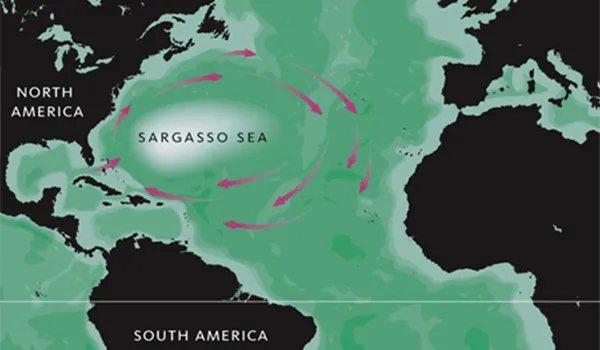
Governments of several countries, including the United States, the United Kingdom, Bermuda, the Azores and Monaco, have signed a declaration to protect the Sargasso Sea, according to a report by the International Union for Conservation of Nature (IUCN).
"This is a truly historic occasion," David Freestone, executive director of the Sargasso Sea Alliance, said in a statement. "It is the first time an international alliance has been formed to protect an iconic high seas ecosystem, using existing legal international frameworks," Freestone said.
The "Hamilton Declaration on Collaboration for the Conservation of the Sargasso Sea" seeks to protect the area, whose abundant floating Sargassum seaweeds shield around 30 species of fish, as well as whales, dolphins and turtles, according to the IUCN report.
The Sargasso Sea is a calm patch of the North Atlantic Ocean isolated by ocean currents. The currents bring in algae and marine debris that help create and sustain the area's characteristic seaweed layer.
Despite being isolated by currents, the Sargasso Sea is subject to numerous ecological hazards, such as pollution, seabed mining and climate change, the report said. And, unlike some other ecologically vulnerable marine regions such as the Mediterranean Sea or the Southern Ocean, the Sargasso Sea is not officially protected by a specific regional organization.
"The Hamilton Declaration represents a rare oasis of joint voluntary action to protect this high seas gem," Kristina Gjerde, IUCN senior high seas policy advisor, said in a statement. "Strong leadership in protecting and managing the Sargasso Sea should send an important message to the international community that now is the time to come together to protect wildlife throughout our global ocean commons," Gjerde said.
Follow Agata Blaszczak-Boxe on Twitter. Follow Live Science @livescience, Facebook & Google+. Original article on Live Science.
Get the world’s most fascinating discoveries delivered straight to your inbox.