















Discovered: Plastic-Eating Barnacles

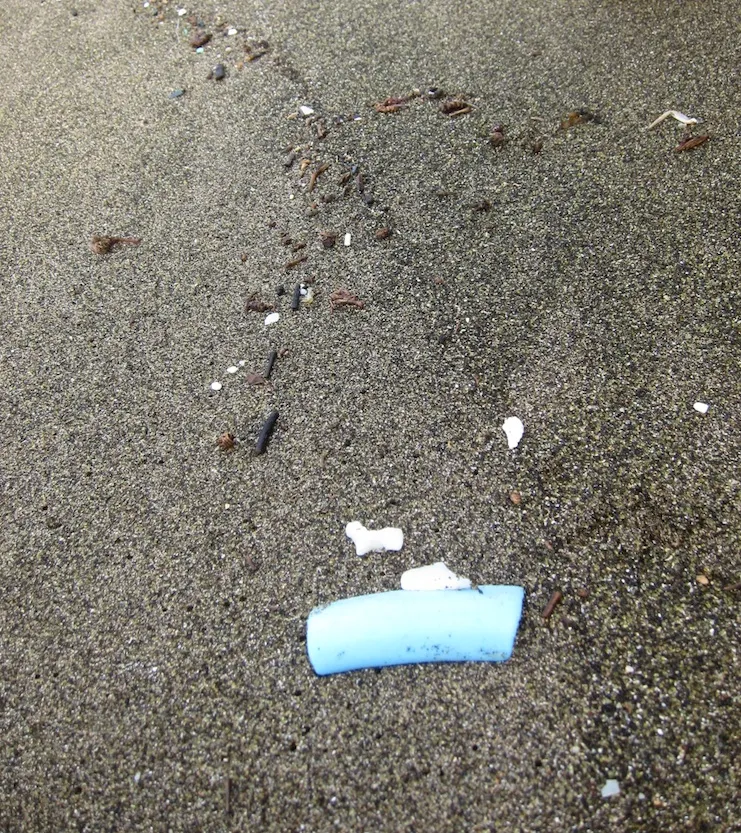
The oceans are full of plastic. Now, research finds that even barnacles are feeling the consequences.
A third of barnacles caught in the North Pacific gyre, a region of the ocean notoriously littered with scraps of plastic, have microfragments of the plastic material in their digestive systems at a given time, a new study finds. Researchers aren't sure whether ingesting the non-food harms the barnacles, but it could crowd out real nutrition.
Plastic debris is a major problem in the oceans, particularly when sea life becomes entangled in the garbage or ingests it. At least 267 marine species have been documented eating plastic, including turtles, fish and birds, researchers report today (Oct. 22) in the open-access journal PeerJ.
The North Pacific gyre is so heavily laden with plastic that it's earned the nickname, "The North Pacific Garbage Patch." Here, Miriam Goldstein of the Scripps Institution of Oceanography in California and Deborah Goodwin of the Sea Education Association in Woods Hole, Mass., tested an unknown question: Are marine invertebrates, such as barnacles and other animals without backbones, also consuming plastic garbage?
Laboratory studies suggested filter feeders like barnacles do pick up plastic pellets, but only three examples of plastic-eating invertebrates were known in the wild. (Sandhopper amphipods, or sand fleas, the Norway lobster and flying squid, for those keeping score.)
The researchers collected barnacles of two species, Lepas anatifera and Lepas pacifica, on two separate trips to the gyre. They then conducted barnacle autopsies, checking the digestive systems of the animals for microplastics, or plastic pieces worn by wind and waves to less than 0.2 inches (5 millimeters) in diameter.
Of the 385 barnacles collected, 129 had ingested plastic, the researchers found. Most of those individuals had a pellet or two in their gut, but 57 had more than three pieces, with one containing a whopping 30 individual plastic particles.
Get the world’s most fascinating discoveries delivered straight to your inbox.
Researchers aren't sure whether these particles are affecting the barnacle's health; there were no signs of digestive backup in this group, at least. The long-term effects are unknown, they wrote.
Unfortunately for the oceans, this tendency for barnacles to eat plastic doesn't help remove the litter permanently.
"The barnacles just poop out the plastic & it floats away again," Goldstein wrote on Twitter.
Follow Stephanie Pappas on Twitterand Google+. Follow us @livescience, Facebook & Google+. Original article on LiveScience.

Stephanie Pappas is a contributing writer for Live Science, covering topics ranging from geoscience to archaeology to the human brain and behavior. She was previously a senior writer for Live Science but is now a freelancer based in Denver, Colorado, and regularly contributes to Scientific American and The Monitor, the monthly magazine of the American Psychological Association. Stephanie received a bachelor's degree in psychology from the University of South Carolina and a graduate certificate in science communication from the University of California, Santa Cruz.