















Diagram of the Human Muscular System (Infographic)

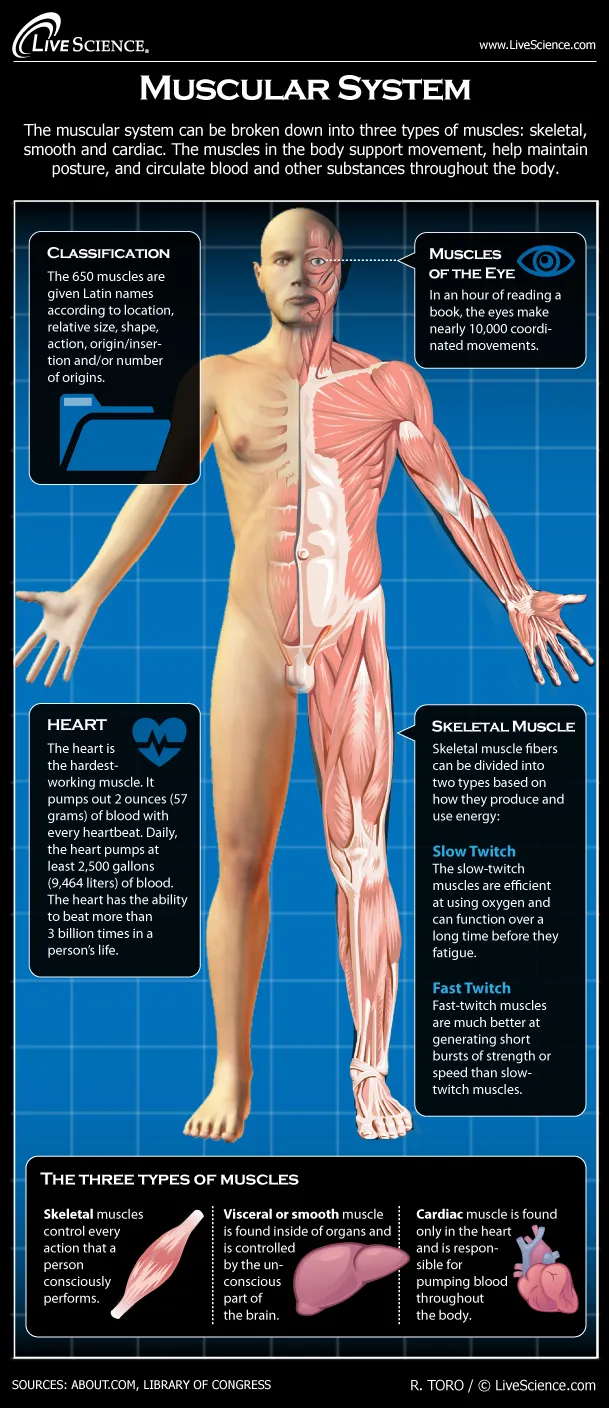
The muscular system can be broken down into three types of muscles: skeletal, smooth and cardiac. The muscles in the body support movement, help maintain posture, and circulate blood and other substances throughout the body.
The 650 muscles are given Latin names according to location, relative size, shape, action, origin/inser-tion and/or number of origins.
In an hour of reading a book, the eyes make nearly 10,000 coordinated movements.
The heart is the hardest-working muscle. It pumps out 2 ounces (57 grams) of blood with every heartbeat. Daily, the heart pumps at least 2,500 gallons (9,464 liters) of blood. The heart has the ability to beat more than 3 billion times in a person’s life.
Get the world’s most fascinating discoveries delivered straight to your inbox.
Skeletal muscle fibers can be divided into two types based on how they produce and use energy:
The slow-twitch muscles are efficient at using oxygen and can function over a long time before they fatigue.
Fast-twitch muscles are much better at generating short bursts of strength or speed than slow-twitch muscles.
Three types of muscle:
Skeletal muscles control every action that a person consciously performs.
Visceral or smooth muscle is found inside of organs and is controlled by the un-conscious part of the brain.
Cardiac muscle is found only in the heart and is responsible for pumping blood throughout the body.
Related:
