















How Bomb Tests Could Date Elephant Ivory

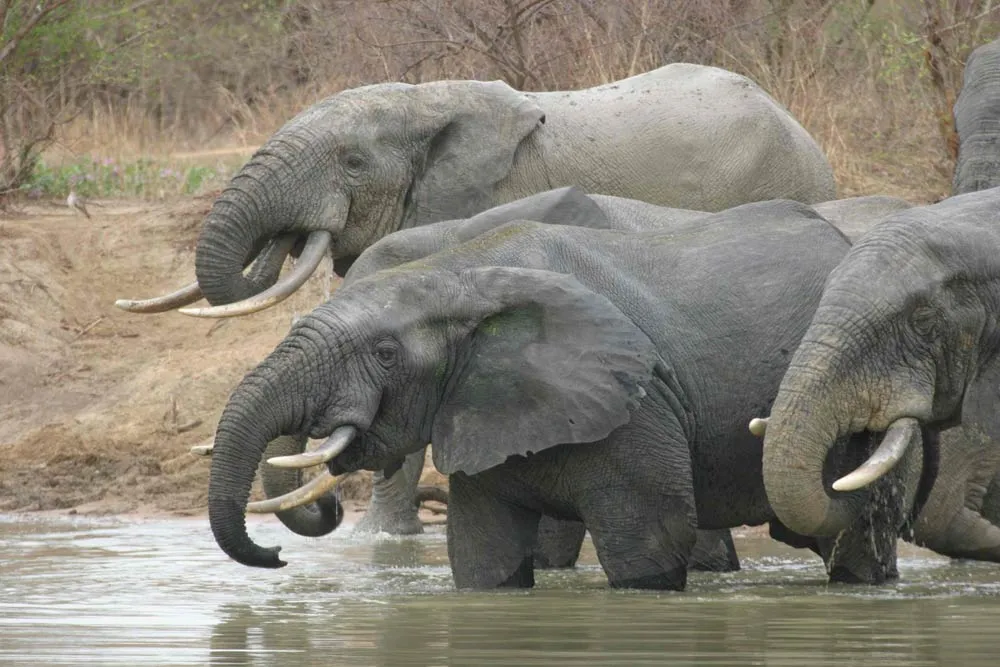
Bomb tests generations ago could indirectly help fight illegal poaching of African elephants, new research shows.
Nuclear weapons tested in the atmosphere in the 1950s and '60s spread a radioactive variety of carbon worldwide, which was picked up by plants during photosynthesis and then deposited in the bodies of herbivores like African elephants. By looking at the levels of this carbon isotope — known as carbon-14 — in elephant tusks and ivory, researchers can find out how old they are. (Isotopes are versions of elements that have differing numbers of neutrons in their nuclei.)
Knowing the age of elephant tusks is important, since many regulations of ivory trade are date-specific. In the United States, for example, ivory taken prior to a 1989 worldwide ban on African elephant tusks may be legally traded, while new ivory is illegal to traffic, said Kevin Uno, a researcher at the Lamont-Doherty Earth Observatory at Columbia University in New York.
"I don't necessarily think this will save the elephants, but it's a critical tool to fight poaching of elephants," said Uno, co-author of a study detailing the technique, published today (July 1) in the journal Proceedings of the National Academy of Sciences.
A critical tool
Atmospheric bomb testing caused a spike in carbon-14 that has slowly declined in the past 50 years. By measuring the concentration of this type of carbon, researchers are given two possible dates for the age of the sample, before and after the spike on the curve of carbon-14 concentrations. To figure out which is the right age, researchers have to sample in two locations on the ivory, said Uno, who performed the research while he was doctoral student at the University of Utah.

Specifically, researchers test one part of the tusk that is younger, and one that is older. They can do this by following the grain of the ivory, which shows which way the tusk grew. This allows them to figure out which of the two dates is the right one, Uno said.
Get the world’s most fascinating discoveries delivered straight to your inbox.
Luckily, the technique can work with a small amount of ivory — "just a pinch" of material, Uno said. This makes it easier to test on jewelry or ivory figurines, he added.
The technique complements another developed in 2004 that uses DNA from tusks to find out where the tusks came from. That method "has the 'where'; we are the 'when,'" Uno told LiveScience.
"This is a very well-designed study and its results could prove very important for addressing illegal trade," said Sam Wasser, a researcher at the University of Washington who developed the DNA-based technique but wasn't involved in the new study.
By combining the techniques, researchers could collaborate with wildlife rangers to protect certain hotspots, Wasser told LiveScience. "The best way to stop the killing [of elephants] is to identify the major poaching hotspots and target them in a concerted law enforcement effort that includes international cooperation," he said. [Elephant Images: The Biggest Beasts on Land]
Poaching getting worse
Poaching of African elephants is "as bad as it's ever been," and getting worse, Uno said. There were an estimated 46.5 tons (42,200 kilograms) of ivory seized in 2011, with even higher numbers suspected in 2012, Wasser said. That suggests as many as 50,000 elephants were killed to provide the ivory seized in 2011. "With a total population of 400,000 elephants, this is a very serious situation," Wasser said.
In other words, if the rate of poaching isn't slowed, African elephants could be mostly gone within 10 years.
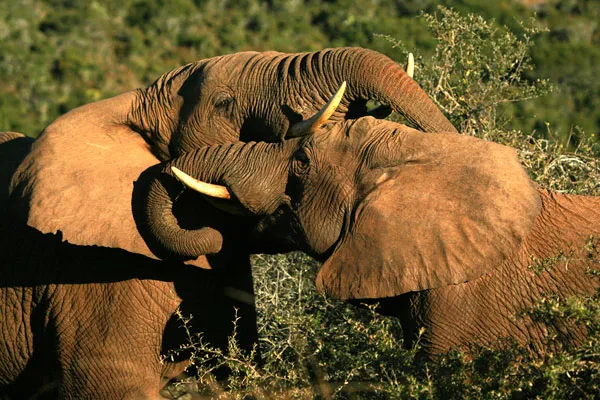
Trafficking is carried out in part by large criminal networks and is a multibillion-dollar industry. It's driven largely by demand in China for ivory and rhino horns, which are valued for the supposed medicinal benefits. The United States also is a destination for illegal ivory, according to the study.
Two things must be done to stop poaching, said Richard Ruggiero, an expert on elephant poaching with the U.S. Fish and Wildlife Service, who was not involved in the research. The first is "to address the growing demand and markets in importing countries," he said in an email interview. "This causes the problem and is the disease that must be treated. This is a question of education, public outreach and awareness, and the willingness of governments and consumers to come to grips with reality."
But curbing demand is too slow, Ruggiero said. Secondly, "we need to be much better at providing security for elephants, to assure detection, apprehension and prosecution of offenders, be they poachers, traffickers or corrupt officials around the world," he added.
President Barack Obama announced today (July 1) a major initiative to fight illegal wildlife trafficking. While on a visit to Tanzania, he will sign an executive order to convene a task force to address the issue, focusing in part on poaching in Africa, according to the White House. To that end, "the U.S. Department of State will provide an additional $10 million in regional and bilateral training and technical assistance in Africa to combat wildlife trafficking," the White House statement said.
Email Douglas Main or follow him on Twitter or Google+. Follow us @livescience, Facebook or Google+. Article originally on LiveScience.com.
