














Why Do Bridges Ice Up Faster Than Roads?

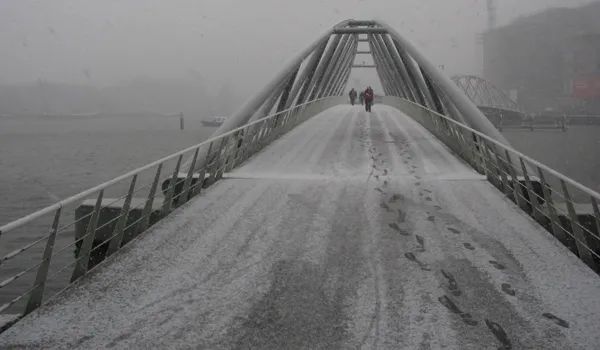
In a winter that has been colder than most , snow has been plentiful. And when a snowstorm buries a city, residents want their streets salted and plowed as soon as possible. But road crews don't head out just in random directions; they have a priority list and some of the first places they go (and return to) are bridges.
Roads are important, but bridges are especially vulnerable to icing over. It's a matter of simple physics: Bridges are subject to much greater temperature extremes than roads. They get colder (and hotter) than their earthbound counterparts because they are exposed to the elements on all sides. A highway's blacktop is insulated by the earth that serves as its foundation, but a bridge is constantly being hit by the below-freezing air that comes with a strong storm, increasing the chance that it will freeze over.
Bridges also are especially susceptible to freezing because of what they're made of. Highway roads are mostly blacktop asphalt, which is made from pebbles and crude oil. This helps roads maintain flexibility throughout temperature extremes and also helps them retain heat pretty well, even in winter.
Bridges, on the other hand, are usually constructed out of concrete and metal materials that are better than asphalt for standing, load-bearing structures and they tend to conduct heat out of the bridge and into the ambient air, dropping their temperature.
- Is Google Street View Legal?
- VIDEO: Watch Boiling Water Turn Into Snow
- Is Fresh Snow Always White? Behold, Red Snow!
Got a question? Send us an email and we'll look for an expert who can crack it.
Get the world’s most fascinating discoveries delivered straight to your inbox.
