














Is bad handwriting genetic?
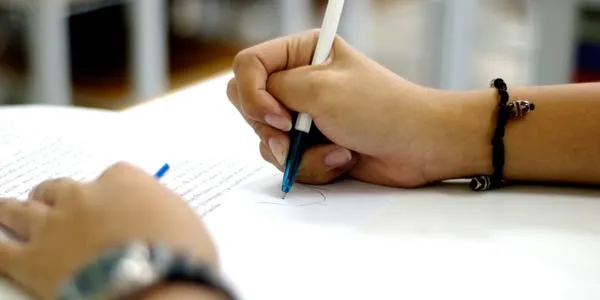
Whether a person writes in script like their mother or sloppily slants their letters like their father, their handwriting is a mix of both nature and nurture, experts say.
Many factors go into determining the style in which a person writes. Penmanship is shaped by a person's life experiences, their character and how they were taught to write, according to Richard Fraser, a handwriting analysis expert and forensic handwriting examiner in Westwood, Mass.
"If a person experiences a traumatic event, their handwriting may change," Fraser said. "Handwriting reflects a person's personality and state of mind an organized person will most likely take care to make sure that every letter is neatly written."
Related: Why do our fingernails keep growing until the day we die?
However, genetics also play a role in shaping how a person dots their i's and crosses their t's. Handwriting is influenced by a person's anatomy, for example, bone structure affects how one holds a pen. Hand-eye coordination, muscle memory and mental ability in copying proper penmanship also influence writing, according to Fraser. Handwriting can change over time as these physical and mental characteristics change.
But genetic influence only goes so far. People whose handwriting is extremely similar to their parents didn't inherit it they simply copied it, maybe even subconsciously.
"Similarities in handwriting produced by family members do sometimes exist when a writer imitates the characters of another family member or even a respected acquaintance," according to the book "Scientific Examination of Questioned Documents" (CRC Press, 2006). "This tendency often occurs during adolescence, when the writer is developing and experimenting with his or her handwriting."
Get the world’s most fascinating discoveries delivered straight to your inbox.
All these factors have a genetic component to some extent, which is not to say that those with bad handwriting are stuck with it for life.
"You can improve your handwriting at any age if you are truly determined to," Fraser told Life's Little Mysteries. However, it does become harder to change your handwriting as you grow older because muscle memory and ingrained habits play a large role in a person's style of writing, he said.
For example, most people are so used to scrawling their signature that they barely focus on it when signing a receipt which is why forensic handwriting experts can detect a forged signature based on how carefully, slowly or haltingly it was written.
- Should Recovering Alcoholics Avoid Bars? The Answer Depends on Genetics
- Are Left-Handed People Smarter?
- Do Identical Twins Have Identical Fingerprints?
Originally published on Live Science.