














Tropical Cyclone Giovanna Nears Madagascar

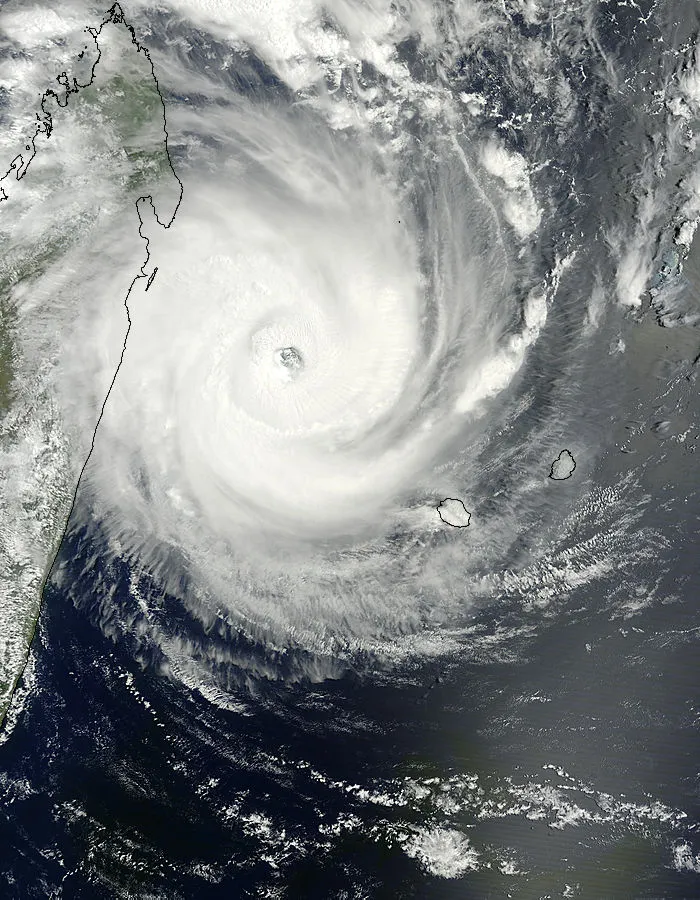
Madagascar, the island nation off Africa's eastern coast, is in the path of a dangerous tropical cyclone.
Tropical Cyclone Giovanna formed as a tropical storm over the southern Indian Ocean on Feb. 9, 2012, and strengthened to a tropical cyclone the next day. The U.S. Navy's Joint Typhoon Warning Center (JTWC) reported that the storm has winds of up to 144 mph (235 kph) and should make landfall over the central portion of Madagascar's eastern coast. Hurricane hunters do not fly missions here, so forecasters are relying on satellite images to track the storm. The storms is a few hours away from making landfall.
Cyclones in the Southern Hemisphere rotate clockwise, so the left part of Giovanna's storm's circulation will come on shore first with the strongest winds. That could be bad news for the city of Antananarivo, with 1.4 million residents. The town is some 4,000 feet (1,200 meters) above sea level, and could see dangerously strong winds.
In the Atlantic basin, tropical cyclones are called tropical storms and hurricanes. Storms this strong can cause major damage by sending waters rushing inland, downing trees and power lines and structurally damaging buildings.
Get the world’s most fascinating discoveries delivered straight to your inbox.
