













Exotic Lizards on the Loose in Florida

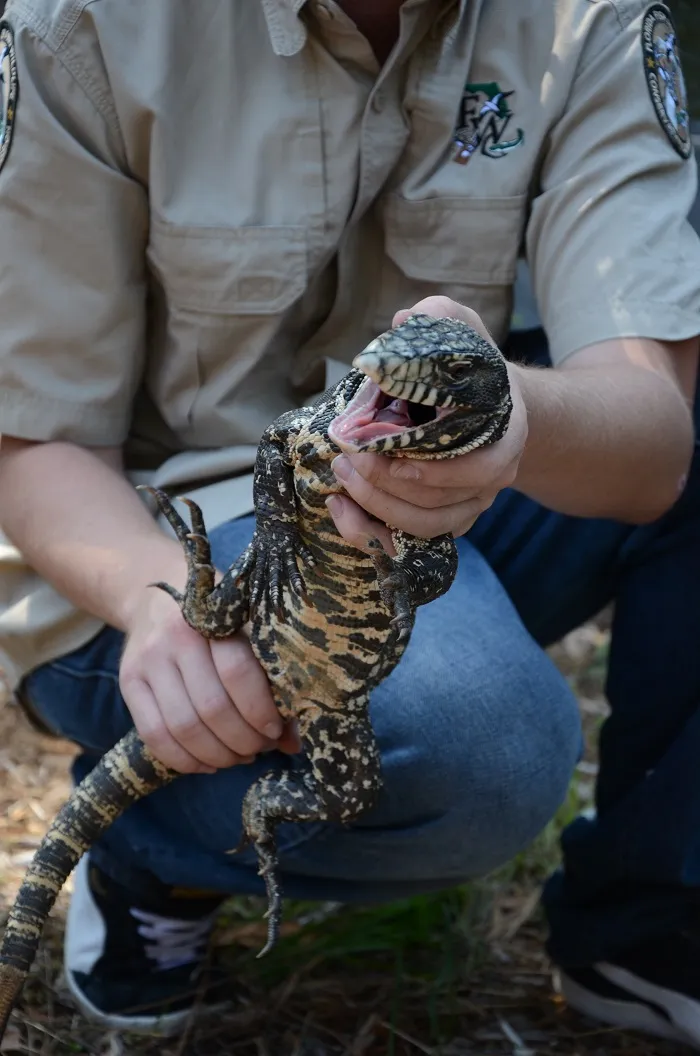
At a time when spring flowers should be emerging from the ground, dozens of four-foot foreign lizards instead crawled out of the dirt in one Florida backyard this month.
An exotic pet dealer in Panama City, Fla., abandoned his lot of lizards called tegus back in the fall when his license to sell the South American reptiles lapsed, authorities say. Before he left the area, he apparently dug dens in his yard for the tegus to retreat to during the winter, which came as a surprise to the new residents.
"The current tenants were told by the landlord some tegus or lizards were on the property but they had no idea what that meant until spring came and these things came out of the ground," said Stan Kirkland, a spokesman for the Florida Fish and Wildlife Conservation Commission (FWC). [Images: Exotic Lizards Pop Out of the Ground in Florida]
Since last week, state wildlife authorities have recovered 34 live tegus, some in poor physical shape, as well as several carcasses, Kirkland said. Most of the black-and-white lizards measured 3 to 4 feet (1 to 1.2 meters) in length and weighed up to 30 pounds (13.6 kilograms). Although a majority of the reptiles were picked up in the fenced-in yard, others were spotted blocks away.
FWC staff are still looking for more lizards and appealing to the public to report any tegu sightings. (Florida has an exotic species hotline, 1-888-IveGot1, and website, IveGot1.org.)
"We don't know how many tegus are loose in the neighborhood," Kirkland told LiveScience on Tuesday (April 30). "We believe several are out, based on sightings by area residents. We set 10 traps today in the area (with bananas and eggs) and those traps will be worked morning and evening the remainder of the week."
Authorities are finalizing charges against the pet dealer who abandoned the tegus, which are likely to include animal cruelty charges, Kirkland said.
Get the world’s most fascinating discoveries delivered straight to your inbox.
Though the lizards can be legally purchased in Florida's pet trade, it's illegal to let non-native animals loose in the wild. Tegus have already established breeding populations in Florida's Miami-Dade, Polk, and Hillsborough counties. This latest incident threatens to expand the lizards' reach in the state's subtropical environment, as researchers know tegus can successfully compete with native species for food, especially since the reptiles have a flexible diet that ranges from vegetables to rodents to alligator eggs. The prospect of another widespread animal invasion is troubling for Florida's state authorities who are already dealing with a daunting pantheon of exotic pets turned invasive species like the Burmese python.
Follow Megan Gannon on Twitter and Google+. Follow us @livescience, Facebook & Google+. Original article on LiveScience.com.
