













Rare Baby Gibbon Born at Bronx Zoo

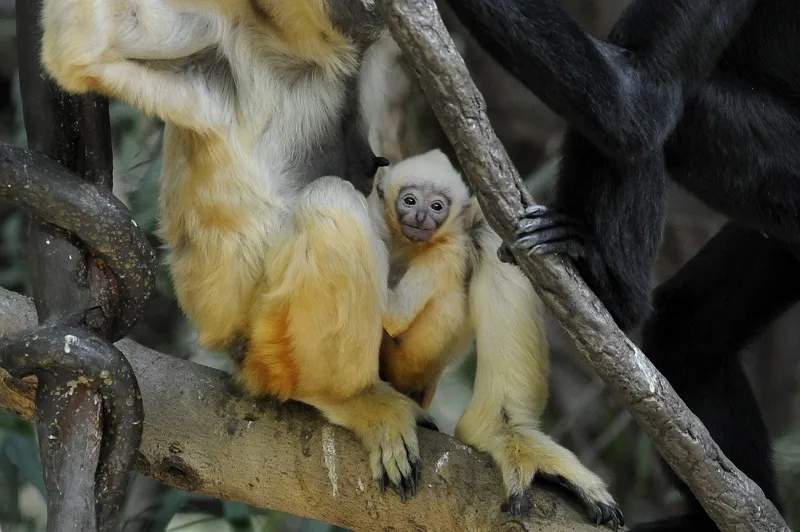
The Wildlife Conservation Society's (WCS) Bronx Zoo has welcomed a rare baby white-cheeked gibbon. The adorable addition is the first of the species born at the New York zoo in more than a decade, according to WCS.
The baby was born on Nov. 24, 2012, and keepers have not yet determined its sex, nor have they named it, zoo officials said. The gibbon's parents are 15-year-old Milton, a first-time dad, and Christine, or "Kicks," a 35-year-old mom who has had 10 other babies, according to WCS.
All white-cheeked gibbons (Nomascus leucogenys) are born with a buff-colored coat that turns black over their first two years. Males remain black when they reach sexual maturity, while females go back to beige.
The slender primates are known for their acrobatic abilities, using their extra-long arms for a spectacular arm-swinging locomotion called brachiation in which they move through the tress with a hand-over-hand technique.
The white-cheeked gibbon is listed as critically endangered by the International Union for Conservation of Nature. The species is native to parts of Southeast Asia, where it is threatened by deforestation and hunting. Captive breeding is a way to ensure that the species survives and that populations in zoos are genetically viable.
Follow LiveScience on Twitter @livescience. We're also on Facebook & Google+.
Get the world’s most fascinating discoveries delivered straight to your inbox.
