













Acrobatic Primates Edge Closer to Extinction
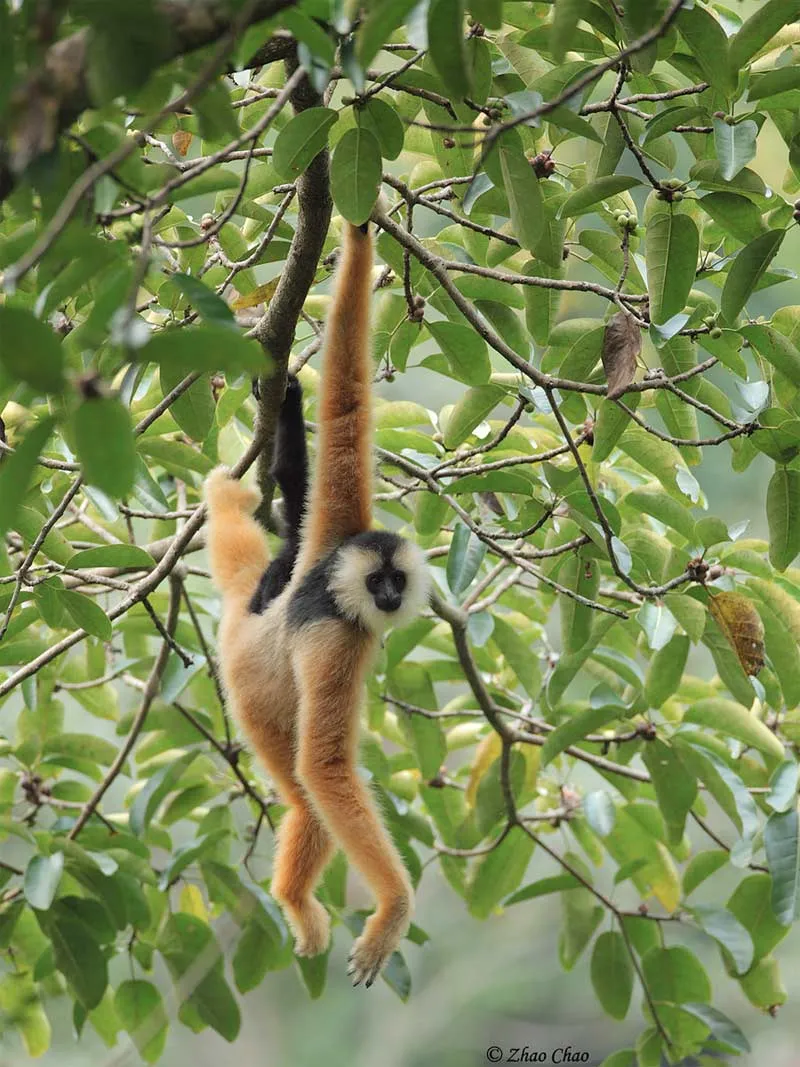
A group of acrobatic primates living, and swinging from tree branches, in Vietnam are not faring so well, with three of the six species inching closer to extinction, finds a new report, released today (May 21), on these primates called crested gibbons.
Gibbons are relatively small, slender primates that are exceptionally agile, using their extra-long arms for a spectacular arm-swinging locomotion called brachiation in which they move through the tress with a hand-over-hand technique. Currently, seven species of crested gibbons in the genus Nomascus are recognized taxonomically. Six of these live in Vietnam.
Gibbon numbers
In the new study, which is an update of a similar survey carried out in 2000, the researchers collected data from all sites in Vietnam where gibbons are known to live, counting them and evaluating the effectiveness of conservation efforts there.
Results showed the three species doing the poorest, and moving dangerously close to extinction, include the eastern black gibbon (N. nasutus), western black gibbon (N. concolor) and northern white-cheeked gibbon (N. leucogenys). The remaining three gibbons in Vietnam — the southern white-cheeked gibbon (N. siki), northern yellow-cheeked gibbon (N. annamensis) and southern yellow-cheeked gibbon (N. gabriellae) — have suffered large population reductions, the researchers report. [Gibbon Gallery: Photos of Acrobatic Primates]
Overall, the few remaining populations that appear viable reside in protected areas that in nearly all cases lack the standard of protection required to ensure their ultimate survival, the report authors say.
"While gibbons are afforded the highest level of legal protection in Vietnam, this is not widely appreciated by either law enforcement officials or local communities," Conservation International primatologist Ben Rawson said in a statement.
Get the world’s most fascinating discoveries delivered straight to your inbox.
"Now largely restricted to protected areas, gibbon populations are being whittled away, individual by individual, to the point where many areas no longer contain viable populations."
That's because even in protected areas, the animals' habitat is being gobbled up by human activities, including illegal logging, agricultural encroachment and infrastructure development such as hydropower dams and roads. In fact, access to the forests for hunters is also a major issue impeding the survival of the gibbons, researchers say.
"Tackling illegal hunting and wildlife trade are key to retaining Vietnam’s wonderful gibbon fauna," Rawson said.
Other highlights from the report include:
— The eastern black gibbon was the only Vietnamese gibbon species whose population appears to have improved during the past decade; the species was rediscovered in 2002 on the border with China in the Trung Khanh District, Cao Bang Province, which is the only location where the species is known to exist — a population of about 110 individuals.
— More than half of the population of western black gibbons has been lost since surveys were first carried out in 2000 and 2001.
— The northern yellow-cheeked gibbon is a new species to this genus, described in 2010; its distinct calls and genetics qualified the animal as a separate crested-gibbon species. All areas where this species was surveyed show declines in numbers.
— The most southerly distributed species, the southern yellow-cheeked gibbon, may be under increasing threat from hunting in southern Vietnam, which may be increasing, the researchers say, due to a growing demand there for gibbons as pets or for use in folkloric medicine.
The report's authors note the loss of gibbons is a bad sign for biodiversity in general.
"Gibbons are wonderfully charismatic and gentle creatures, which do not harm anyone's livelihoods, but charm us with their beauty, acrobatics, song, and they are our closest relatives in Vietnam," researcher Nguyen Manh Ha, of Vietnam National University, said in a statement.
Ha added, "If nothing can be done to secure the long-term future of gibbons in Vietnam, what hope is there for the rest of Vietnam’s biodiversity and the fragile environment its human population depends upon?"
The report, "The Conservation Status of Gibbons in Vietnam," was carried out by Fauna & Flora International and Conservation International.
Follow LiveScience for the latest in science news and discoveries on Twitter @livescience and on Facebook.
Jeanna Bryner is managing editor of Scientific American. Previously she was editor in chief of Live Science and, prior to that, an editor at Scholastic's Science World magazine. Bryner has an English degree from Salisbury University, a master's degree in biogeochemistry and environmental sciences from the University of Maryland and a graduate science journalism degree from New York University. She has worked as a biologist in Florida, where she monitored wetlands and did field surveys for endangered species, including the gorgeous Florida Scrub Jay. She also received an ocean sciences journalism fellowship from the Woods Hole Oceanographic Institution. She is a firm believer that science is for everyone and that just about everything can be viewed through the lens of science.