













Sumatran Tigers Finally Mate at National Zoo

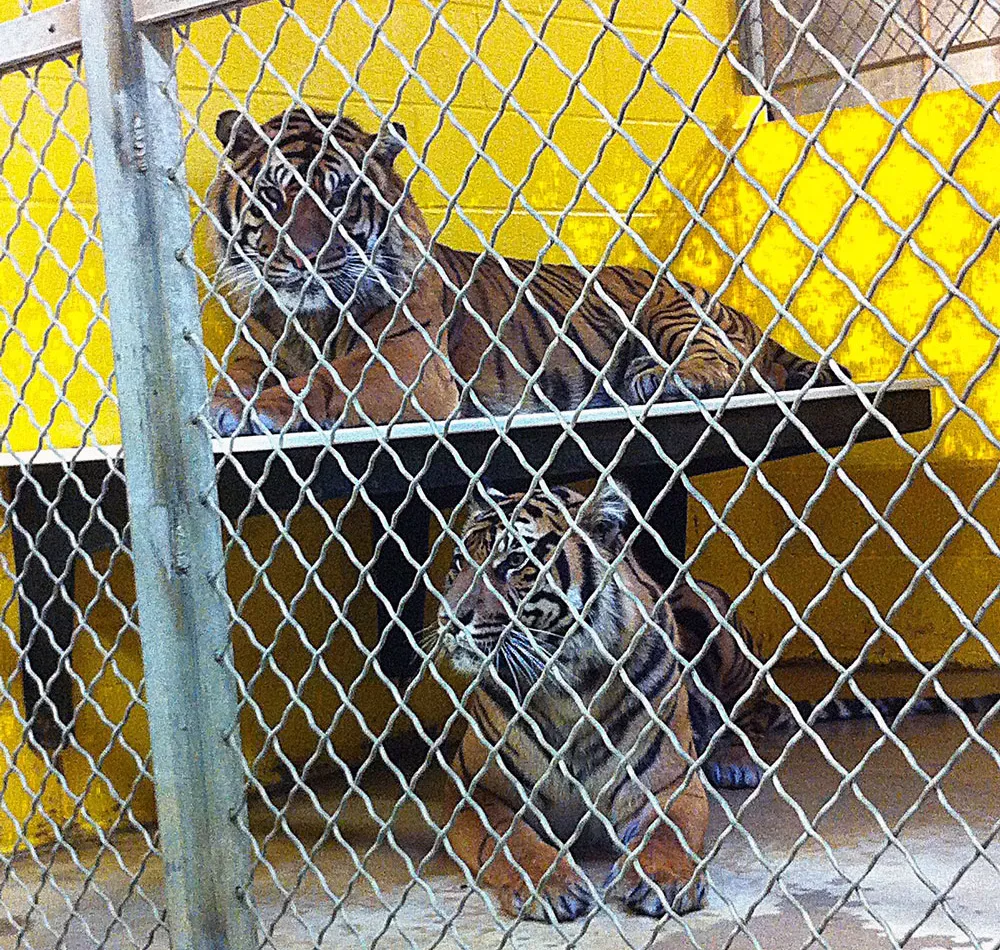
Fewer than 400 Sumatran tigers are left in the wild, and as their numbers continue to dwindle, zoos are turning to captive breeding as a way to conserve the critically endangered species.
But captive cats don't always approach mating as if the survival of their species depends on it. That's why the Smithsonian's National Zoo excitedly announced this week that its two Sumatran tigers, Kavi and Damai, finally bred.
Zoo officials have documented the careful courtship process on their Tiger Diary blog. They said the tigers first met in the fall of 2012, and were initially only given visual access to each other, kept physically separated by a door. The two were finally brought together in December when Damai, the female, went into heat, and zoo officials prepared for a potentially volatile conjugal visit.
"When we first do an introduction we have everyone available there with hoses and carbon dioxide fire extinguishers, as well as people manning the doors so that we can try and separate the cats if things turn ugly," read a Tiger Diary entry last month. "If you have ever heard house cats mating, you know that it can be difficult to tell between things going well and things going badly. This can be true with tigers as well, only much louder."
But the meeting wasn't nearly so explosive. Instead, when the door opened, Damai abandoned her flirtatious behavior of the previous few weeks and hid under a bench. Over the next days, keepers brought the cats together while Damai wasn't in heat. [Fun Facts About Tigers]
"We feel that these 'soft' intros really helped Damai understand that Kavi had no intention of hurting her," zoo officials wrote in a Jan. 2 post. "We would wait until both cats had settled down in their respective enclosures and then open the door that separated them. Then we watched what appeared to be a whole lot of nothing. But in fact, over the course of a couple of weeks, there was a gradual easing of tension."
By the time Damai went into heat again, she was more confident and relaxed with her partner, zookeepers said, and the two mated — though Kavi did not emerge totally unscathed.
Get the world’s most fascinating discoveries delivered straight to your inbox.
"There were still a few false starts and … when the fur flew, it always seemed to be Kavi's fur, not Damai's," a blog entry read. "There was never any serious damage done, but still Kavi's patience and self control have been very impressive."
Zoo officials explained that for tigers, the breeding itself causes the female's ovaries to release eggs. So they'll know that Damai is pregnant if she does not go into heat again.
Follow Live Science on Twitter @livescience. We're also on Facebook & Google+.
