













Extra Sunshine Blamed for Part of Arctic Meltdown

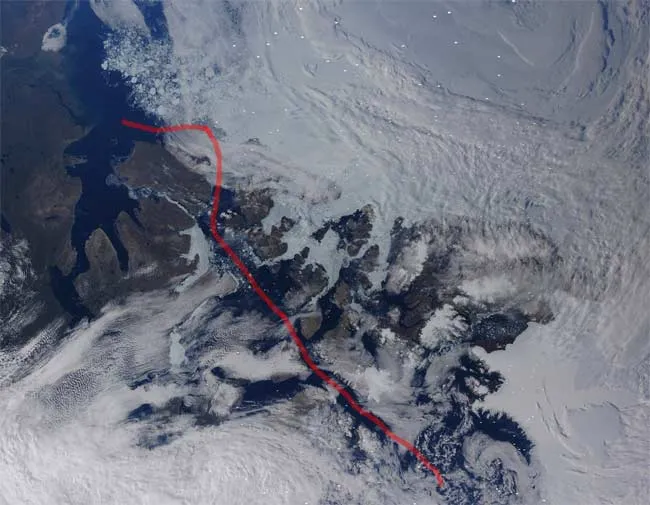
SAN FRANCISCO—A reduction in clouds was likely a culprit in this summer’s record Arctic meltdown which temporarily opened up the fabled Northwest Passage, scientists announced this week.
While Earth’s rising temperatures fueled by global warming are certainly a factor in the Arctic melt, unusual weather patterns this summer also influenced how much of the sea ice melted.
One result of these patterns was a decrease in cloud cover, scientists said at a meeting of the American Geophysical Union, which would have allowed more sunlight to penetrate Earth’s atmosphere and warm the Arctic ocean waters.
New data from NASA satellites observing the western Arctic, where most of the ice loss occurred, showed a 16 percent decrease in cloud coverage this summer compared to 2006.
"There’s been quite dramatic reductions of cloudiness this summer," said study member Graeme Stephens of Colorado State University.
The amount of sunlight from these clearer skies would have been enough to heat ocean waters by 4 degrees Fahrenheit (2.4 degrees Celsius), or enough to melt 1 foot (0.3 meters) of sea ice, the scientists said.
"Clouds are conspiring, they’re playing a role in this," said study author Jennifer Kay, a post-doctoral research fellow at the National Center for Atmospheric Research in Boulder, Colo.
Get the world’s most fascinating discoveries delivered straight to your inbox.
Kay says the result of this work highlights the importance of the influence of weather pattern variability on an already stressed-out Arctic system.
"As Arctic sea ice thins, its extent is more sensitive to year-to-year variability in weather and cloud patterns," Kay said. "Our data show that clearer skies this summer allowed more of the sun’s energy to melt the vulnerably thin sea ice and heat the ocean surface."
- Top 10 Surprising Results of Global Warming
- Scientists Clueless over Sun's Effect on Earth
- Video: Goldilocks and the Greenhouse

Andrea Thompson is an associate editor at Scientific American, where she covers sustainability, energy and the environment. Prior to that, she was a senior writer covering climate science at Climate Central and a reporter and editor at Live Science, where she primarily covered Earth science and the environment. She holds a graduate degree in science health and environmental reporting from New York University, as well as a bachelor of science and and masters of science in atmospheric chemistry from the Georgia Institute of Technology.