The Secret to Sniffing: How We Smell So Well

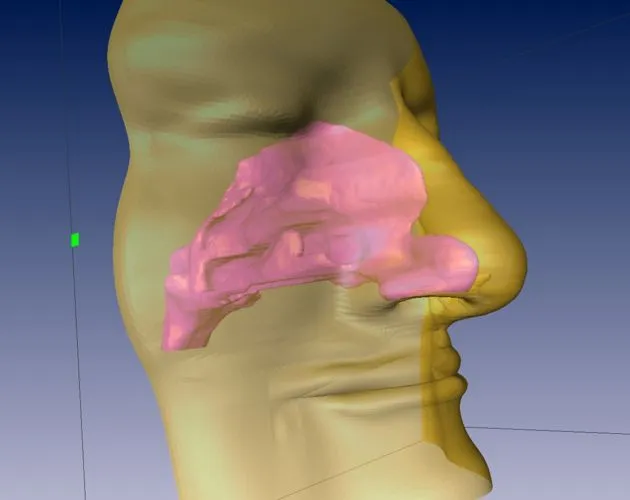
Sniffing the air does more than just vacuum odors into your nose. It also ramps up electrical signals from the snout to the brain, helping the schnoz detect even faint scents.
"Sniffing helps us to smell better," Minghong Ma, a University of Pennsylvania neuroscientist, told LiveScience.
Ma and her colleagues learned the secret to sniffing by investigating mice noses. The scientists puffed a mix of odors past the rodent sniffers, such as those in almond-like and banana-like fragrances. As expected, this generated a response in the olfactory neurons, the primary nose cells behind perception of scents.
The researchers also puffed an odorless mist into the noses. They found a similar but smaller reaction in the olfactory neurons. As they decreased the pressure of such odorless puffs, they found the response from the olfactory neurons scaled down as well.
"This is quite astonishing," said neuroscientist Jeffry Isaacson at the University of California at San Diego, who did not participate in this study.
"Most sensory neurons in the body are designed to detect a single kind of sensory input, like light or smell or taste," Isaacson explained. "Here's a case where a single type of sensory neuron, one we thought was just responsible for smell, also responds to mechanical stresses like pressure or airflow."
- Video: Sex and the Senses
Ma noted that "we were initially 'annoyed' by our own finding, because we were most interested in how the odor information is encoded by the olfactory sensory neurons. The mechanical responses found in many olfactory sensory neurons made our daily experiments a bit harder."
Get the world’s most fascinating discoveries delivered straight to your inbox.
Ma and her colleagues, whose sniff study is detailed in the March issue of the journal Nature Neuroscience, also found that mechanical stimulation from sniffing might enhance neuron activity and thus boost nasal sensitivity, especially when scents are faint. Airflow into the nose might help rouse neurons enough to help detect faint odors that the neurons had previously failed to detect in an unaroused state.
"We still don't know how it happens, but sniffing is essential for odor perception," Ma said.
Isaacson noted that "the sense of smell is so critical in most animals that this interesting boost for detection of odors linked with food or mates or predators may have developed to help them survive. Maybe we have it as well."