

Quick facts
Oldest ancestor of all life: Approximately 4.2 billion years
First human species: Homo habilis, which lived from about 2.0 to 1.6 million years ago
Number of species on Earth: Around 9 million

5 fun facts about evolution
Everything you need to know about evolution
Evolution pictures


Discover more about evolution


-
 What does 'abiotic' mean?
Science word of the day Pronunciation: Ay-bye-AH'-tik
Science word of the day -
 What does 'abiogenesis' mean?
Science word of the day Pronunciation: Ay-bye-oh-JEN'-ih-sis
Science word of the day -
 What does 'autotroph' mean?
Science word of the day Pronunciation: AW'-tuh-trohf
Science word of the day -
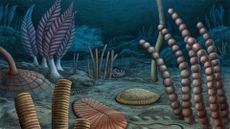 Complex animals evolved up to 10 million years earlier than previously thought, fossil discovery shows
Trove of fossils discovered in Canada sheds light on "when life first became large, complex and unmistakenly animal."
evolution -
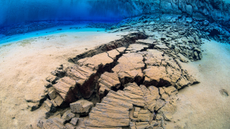 'Maybe they're waiting for something that only happens thousands of years later': The hidden life 'sleeping' deep beneath Earth for millions of years
Deep inside Earth lies a hidden world of "intraterrestrials" that have been dormant for hundreds of thousands of years — what are they waiting to "wake up" for?
5 Commentsevolution -
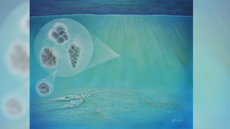 Life may have rebounded 'ridiculously fast' after the dinosaur-killing asteroid impact
After the asteroid smashed into Earth around 66 million years ago, it didn't take life that long to rebound, a new study finds.
10 Commentsevolution -
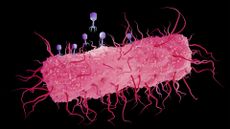 Science history: Experiment shows mutations arise spontaneously, supporting pillar of Darwinian evolution — Nov. 20, 1943
Two bacteriologists showed that mutations arise spontaneously in bacterial cultures, thereby disproving Jean-Baptiste Lamarck's theory of evolution.
evolution -
 Tomatoes randomly mated with another plant 9 million years ago. The result? Potatoes.
Researchers say they have finally uncovered the mysterious origins of one of our favorite carbs: the humble potato.
9 Commentsevolution -
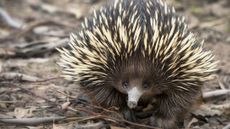 In rare evolutionary event, weird platypus cousin evolved from living in water to living on land
We may have gotten the evolutionary origins of the echidna backward, as new research suggests its ancestors probably lived in the water, not on land.
3 Commentsevolution


