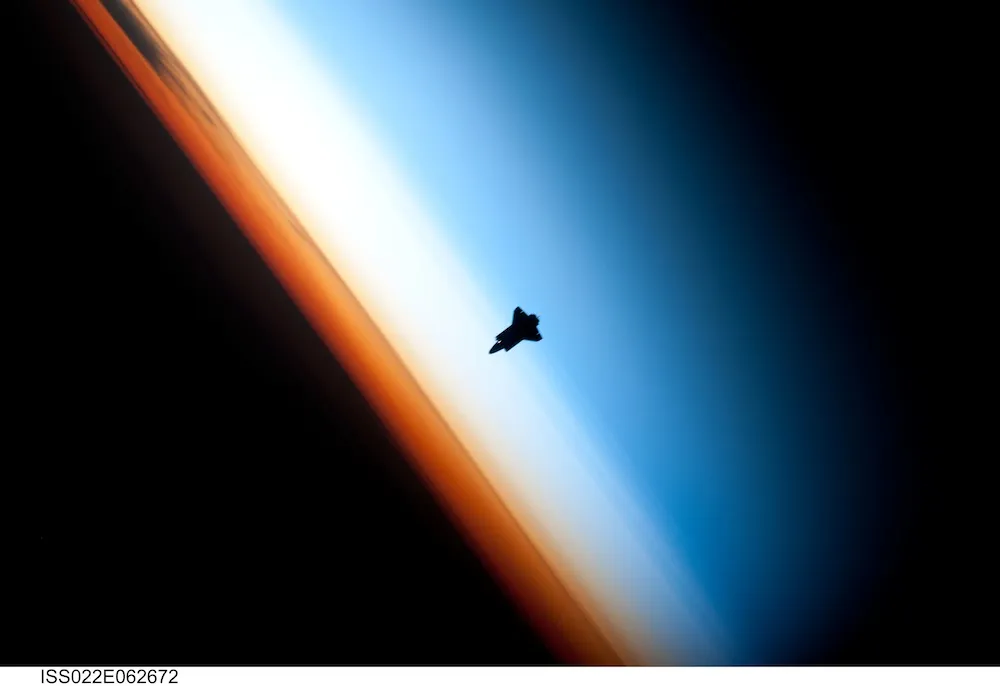
Earth's atmosphere is about 78 percent nitrogen, 21 percent oxygen, with trace amounts of water, argon, carbon dioxide and other gases. The exact composition, as well as the temperature and pressure of the atmosphere, varies with its height. The atmosphere is divided into layers: The troposphere is the lowest layer and extends from Earth's surface up to a height of about 30 miles (48 kilometers); it is where most of Earth's weather occurs. Above the troposphere is the stratosphere, where the ultraviolet-blocking ozone layer is found. Above that is the mesosphere, the thermosphere and the ionosphere. Earth's atmosphere is home to different types of clouds, the auroras, different types of lightning.

-
 Powerful Mother's Day geomagnetic storm created radio-disrupting bubbles in Earth's upper atmosphere
Researchers have provided some new insights about the powerful geomagnetic storm that flared up last Mother's Day, after a big solar storm hit Earth.
-
 How much did SpaceX's Starship Flight 7 explosion pollute the atmosphere?
Scientists are not sure how much metallic dust remained in the atmosphere after the most recent SpaceX rocket 'disassembly.'
-
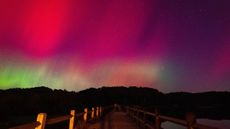 Earth's elusive 'ignorosphere' could shed new light on auroras
We know very little about some parts of Earth's atmosphere.
-
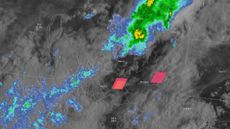 Exploding meteor startles Utah
A loud explosion heard Saturday (Aug. 13) in Utah may have been an exploding Perseid meteor.
-
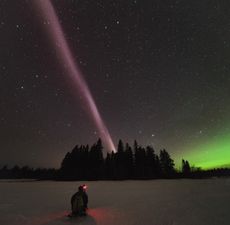 Eerie Sky Glow Called 'Steve' Isn't an Aurora, Is 'Completely Unknown' to Science
There is a beautiful mystery in the sky, and its name is Steve.
-
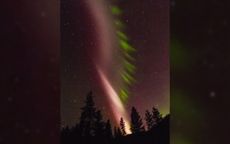 Mystery of Weird Sky-Glow Named 'STEVE' Finally Solved
Enigmatic STEVE is somewhat like an aurora...and somewhat different.
-
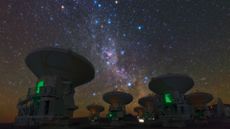 Why do stars twinkle?
Stars appear to twinkle because the light from these distant objects passes through wobbly air in the atmosphere.
-
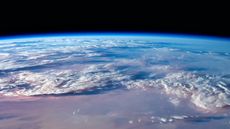 New, extremely reactive chemical discovered in the atmosphere
Millions of tons of a type of extremely reactive chemical can form in the atmosphere each year, with implications for health and the global climate.
-
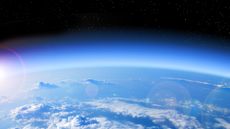 Where does Earth end and outer space begin?
The atmosphere is vast and parts of it extend beyond the moon. But where does it technically end, according to scientists?


