Get the world’s most fascinating discoveries delivered straight to your inbox.
You are now subscribed
Your newsletter sign-up was successful
Want to add more newsletters?
Delivered Daily
Daily Newsletter
Sign up for the latest discoveries, groundbreaking research and fascinating breakthroughs that impact you and the wider world direct to your inbox.
Once a week
Life's Little Mysteries
Feed your curiosity with an exclusive mystery every week, solved with science and delivered direct to your inbox before it's seen anywhere else.
Once a week
How It Works
Sign up to our free science & technology newsletter for your weekly fix of fascinating articles, quick quizzes, amazing images, and more
Delivered daily
Space.com Newsletter
Breaking space news, the latest updates on rocket launches, skywatching events and more!
Once a month
Watch This Space
Sign up to our monthly entertainment newsletter to keep up with all our coverage of the latest sci-fi and space movies, tv shows, games and books.
Once a week
Night Sky This Week
Discover this week's must-see night sky events, moon phases, and stunning astrophotos. Sign up for our skywatching newsletter and explore the universe with us!
Join the club
Get full access to premium articles, exclusive features and a growing list of member rewards.
If plate tectonics followed the laws of Hollywood physics, Los Angeles would be tearing violently from the mainland as we speak. The scenario would probably include a buxom seismologist and a secret nuclear warhead, too.
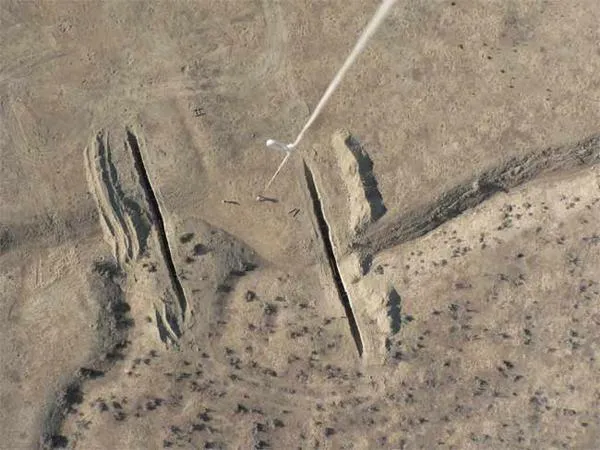
But rest assured that, outside the movies, California Island won't be popping up on any maps. Much of California does lie along the San Andreas Fault, an 800-mile fracture in the Earth's crust stretching from the Gulf of California to San Francisco. Here two immense plates of rock, floating on a semi-molten layer, meet and move against each other in what's called a strike-slip fault. The stress caused by this movement can result in devastating earthquakes, like the 1906 quake that destroyed much of San Francisco.
But the motion between these two rock masses beneath the Golden State is mostly horizontal. That is, the Pacific plate is moving "up" the coast, not away from the North American plate, at a rate of dozens of millimeters per year.
So in several million years, residents of San Francisco will see the L.A. skyline out their windows.
Follow Life's Little Mysteries on Twitter @llmysteries. We're also on Facebook & Google+.
Get the world’s most fascinating discoveries delivered straight to your inbox.