













Warming Impacts Antarctic Food Chain

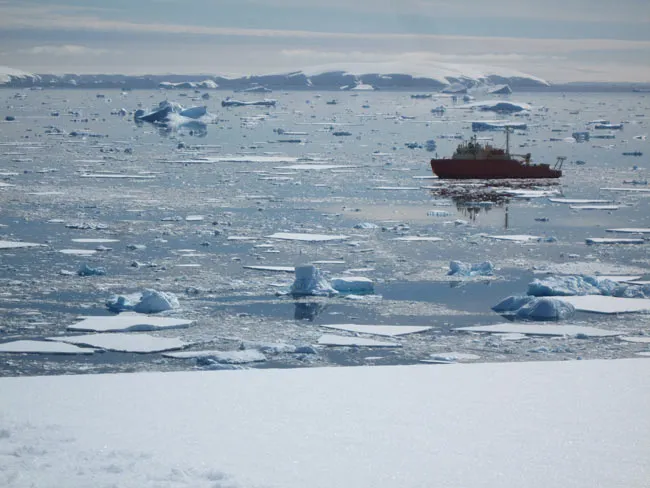
Rapid climate changes along the Antarctic Peninsula have caused a simultaneous shift in the biological productivity of the area, finds a new study that could explain why some penguins and other species there are on the decline. The western portion of the Antarctic Peninsula (the northernmost part of the continent) has experienced 4.5 degrees Fahrenheit (2.5 degrees Celsius) of warming over about the last 30 years — more than anywhere else on the planet — and declining sea ice coverage. This warming caused a shift from the usual cold, dry climate of the area to warmer, wetter conditions, at least in the northern parts of the peninsula, in the past few decades. Along with this regional climate change , researchers have noticed that populations of Adélie penguins and krill — both of which thrive in a cold, dry climate — have moved southward (poleward). Meanwhile other species, particularly Chinstrap penguins, are taking over the northern areas. Martin Montes-Hugo of Rutgers University in New Jersey, along with his colleagues, suspected that the migration of the penguins could be related to changes at the base of the Antarctic food chain, namely phytoplankton. Using data from 30 years of satellite coverage and field studies, they determined that levels of phytoplankton off the western shelf of the peninsula have declined by 12 percent over that time. "We're showing for the first time that there is an ongoing change on phytoplankton concentration and composition along the western shelf of the Antarctic Peninsula that is associated with a long-term climate modification," Montes-Hugo said. "These phytoplankton changes may explain in part the observed decline of some penguin populations." The results of the study, funded in part by the National Science Foundation, are detailed in the March 13 issue of the journal Science. "Now we know that climate changes are impacting at the base of the food web and forcing their effects on up through the food chain," said study team member Hugh Ducklow of the Marine Biological Laboratory in Woods Hole, Mass.
- Video – Living with Penguins
- Video – Antarctic Ice Shelf Disintegrates
- Antarctica News, Images and Information
Get the world’s most fascinating discoveries delivered straight to your inbox.

Andrea Thompson is an associate editor at Scientific American, where she covers sustainability, energy and the environment. Prior to that, she was a senior writer covering climate science at Climate Central and a reporter and editor at Live Science, where she primarily covered Earth science and the environment. She holds a graduate degree in science health and environmental reporting from New York University, as well as a bachelor of science and and masters of science in atmospheric chemistry from the Georgia Institute of Technology.