













Nut-Cracking Dinosaur Like a Giant Parrot

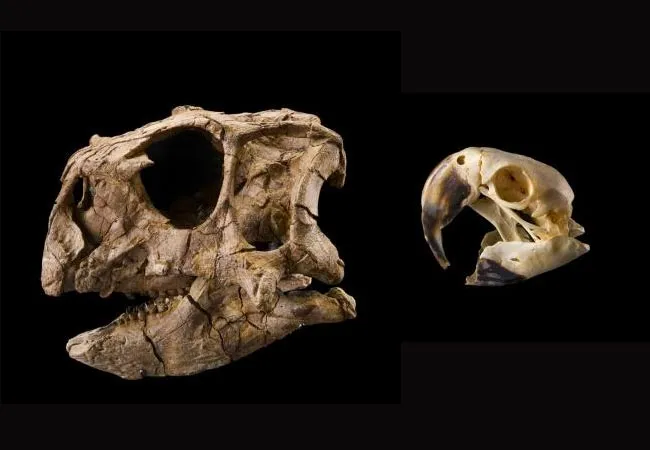
A newly described dinosaur hopefully suffered no nut allergies. Fossil remains suggest the parrot-beaked beast that lived 110 million years ago was a sophisticated nutcracker, researchers said this week.
The dinosaur, now named Psittacosaurus gobiensis, was a ceratopsian, a group of "bird-hipped" dinosaurs, such as Triceratops, that are thought to have ground up tough vegetation with their prolific teeth. The fossil remains were found in the Gobi Desert of Inner Mongolia in 2001.
Paleontologists recently studied the specimen and found skull evidence that the dinosaur ate nuts and seeds.
"The parallels in the skull to that in parrots, the descendants of dinosaurs most famous for their nut-cracking habits, is remarkable," said Paul Sereno, a paleontologist at the University of Chicago.
Sereno and two colleagues from the People's Republic of China detail the dinosaur in the June 17 issue of the journal Proceedings of the Royal Society B.
And more nutty evidence: "The psittacosaur at hand has a huge pile of stomach stones, more than 50, to grind away at whatever it eats, and this is totally out of proportion to its three-foot body length," Sereno said.
Similarly, the quantity and size of gizzard stones in birds correlates with dietary preference. Larger, more numerous gizzard stones indicate a menu of harder food, such as nuts and seeds.
Get the world’s most fascinating discoveries delivered straight to your inbox.
Sereno suggests the psittacosaur chewed its bird-like meals in a unique manner, which the researchers call "inclined-angle" chewing.
"The jaws are drawn backward and upward instead of just closing or moving fore and aft," he said. "It remains to be seen whether some other plant-eating dinosaurs or other reptiles had the same mechanism."
Figuring out what dinosaurs ate can be tricky, though in at least two cases gut contents have been uncovered. For instance, preserved stomach contents from a hadrosaur nicknamed "Leonardo" suggested the animal's last meal included well-chewed leaves.
- Avian Ancestors: Dinosaurs That Learned to Fly
- Birds of Prey: Spot Today's Dinosaurs
- Dinosaur Spills His Guts
