 Live Science Plus






Grim Tally: Rhino Poaching at All-Time High in S. Africa
You are now subscribed
Your newsletter sign-up was successful
Want to add more newsletters?

Delivered Daily
Daily Newsletter
Sign up for the latest discoveries, groundbreaking research and fascinating breakthroughs that impact you and the wider world direct to your inbox.

Once a week
Life's Little Mysteries
Feed your curiosity with an exclusive mystery every week, solved with science and delivered direct to your inbox before it's seen anywhere else.

Once a week
How It Works
Sign up to our free science & technology newsletter for your weekly fix of fascinating articles, quick quizzes, amazing images, and more

Delivered daily
Space.com Newsletter
Breaking space news, the latest updates on rocket launches, skywatching events and more!

Once a month
Watch This Space
Sign up to our monthly entertainment newsletter to keep up with all our coverage of the latest sci-fi and space movies, tv shows, games and books.

Once a week
Night Sky This Week
Discover this week's must-see night sky events, moon phases, and stunning astrophotos. Sign up for our skywatching newsletter and explore the universe with us!
Join the club
Get full access to premium articles, exclusive features and a growing list of member rewards.
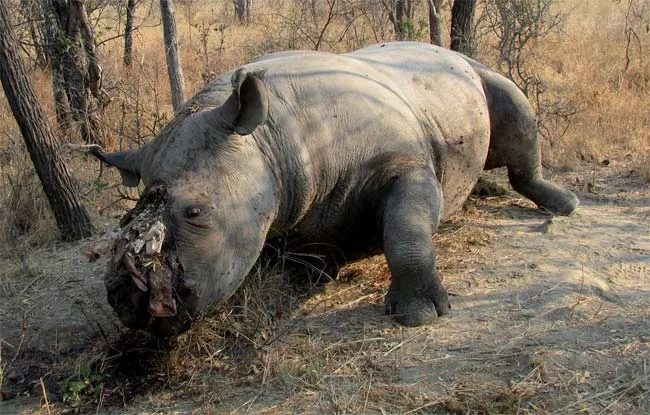
In 2010, the illegal slaughter of rhinos in South Africa reached unprecedented heights, averaging almost one rhino killed every day, according to the WWF, an international conservation group. That's nearly triple the number killed in 2009.
National park officials say that a record 333 rhinos were killed last year, including 10 critically endangered black rhinos. According to the International Union for Conservation of Nature (IUCN), only about 4,200 black rhinos are still alive on the planet. White rhinos are classified as near-threatened.
Kruger National Park, home to South Africa's largest population of both black and white rhinos, was hardest hit, losing 146 animals to poaching.
Rhino poaching across Africa has risen sharply in the past few years, threatening to reverse hard-won population increases achieved in the 20th century.
"The recovery of African white rhinos from less than 100 in the late 19th century to more than 20,000 today is a phenomenal conservation success story that can largely be attributed to the combined efforts of South Africa’s state and private conservation authorities," said Morné du Plessis, CEO of WWF South Africa.
The current wave of poaching is being committed by sophisticated criminal networks using helicopters, night-vision equipment, tranquilizers and silencers to kill rhinos at night to avoid law enforcement patrols.
"This is not typical poaching,” said Joseph Okori, WWF African rhino program manager. “The criminal syndicates operating in South Africa are highly organized. They are very well coordinated."
The recent increase in killings is largely due to heightened demand for rhino horn, which has long been prized as an ingredient in traditional Asian medicine. Some believe the horns can cure cancer, a claim with no medical basis.
Although the sale of rhino horn is illegal in most countries, WWF officials are urging officials across Asia to step up enforcement.
Five rhinos have already been killed by poachers this year.
- 10 Species You Can Kiss Goodbye
- Image Gallery: Endangered and Threatened Wildlife
- In Images: The Wild Cats of Kruger National Park
This article was provided by OurAmazingPlanet, a sister site to LiveScience.

