













Pregnancy Hormones May Cause Memory Problems

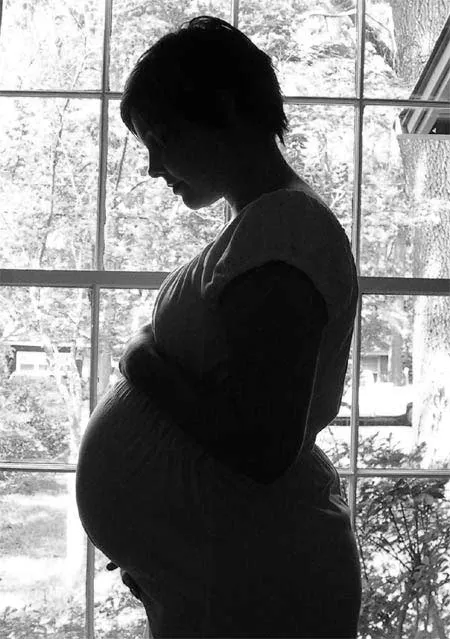
Many pregnant women report being more forgetful as their pregnancy progresses, and new research suggests it could be caused by elevated hormone levels affecting the brain.
Previous studies haven't turned up a solid link that could explain maternal memory problems, widely reported on an anecdotal basis.
"I think women are interested and sometimes worried about their memory, and whether they're going to get it back if they feel that they've lost some of their cognitive function during pregnancy," said researcher Diane Farrar of the University of Bradford and Bradford Institute for Health Research in England.
Farrar and her colleagues set out to test the spatial memory of pregnant women — that's the memory that tells us where we parked the car or set down the keys. The researchers also measured the levels of a set of sex hormones in the pregnant women and had them fill out a questionnaire to judge their mood and level of anxiety. The results for the 23 pregnant women in the study were compared with 24 non-pregnant women.
During their second and third trimesters, the pregnant women performed significantly worse than the non-pregnant women on spatial memory tests, the study found. The memory effect still held at three months after birth.
The pregnant women also had a lower mood and more anxiety during their pregnancy than the non-pregnant women did, though those scores were about the same for both groups three months after birth.
The findings, presented last week at the Society for Endocrinology BES conference in Manchester, England, suggest that the high levels of sex hormones circulating in the bodies of pregnant women could have a negative impact on the neurons in the parts of the brain responsible for spatial memory, particularly the hippocampus.
Get the world’s most fascinating discoveries delivered straight to your inbox.
"We know for sure that sex steroids at high levels can have damaging effects on neurons," Farrar told LiveScience, though she added that it's impossible to know if this is indeed the case from this study alone.
"We can't really check to see what's happening, so it's pretty difficult really," Farrar said. "We can only speculate that it could be the sex steroid levels that are affecting cognitive function."
Another possibility is that the depressed mood of the pregnant women could be affecting their memory, though mood had rebounded three months after birth, while memory function had not. If sex hormones are behind the memory deficit, the lack of rebound after three months could simply be because it takes the brain awhile longer to recover from the elevated hormone levels.
Farrar noted that not all pregnant women will experience this decline in memory. But for those who do seem to think they're having more memory problems as their pregnancy progresses, it might help if scientists could determine that it was a normal reaction that dissipated after birth.
"It's an area that needs looking at more, just to make things clearer to women," she said.
- 5 Myths About Women's Bodies
- 10 Ways to Keep Your Mind Sharp
- More News About Pregnancy

Andrea Thompson is an associate editor at Scientific American, where she covers sustainability, energy and the environment. Prior to that, she was a senior writer covering climate science at Climate Central and a reporter and editor at Live Science, where she primarily covered Earth science and the environment. She holds a graduate degree in science health and environmental reporting from New York University, as well as a bachelor of science and and masters of science in atmospheric chemistry from the Georgia Institute of Technology.