 Live Science Plus





You are now subscribed
Your newsletter sign-up was successful
Want to add more newsletters?

Delivered Daily
Daily Newsletter
Sign up for the latest discoveries, groundbreaking research and fascinating breakthroughs that impact you and the wider world direct to your inbox.

Once a week
Life's Little Mysteries
Feed your curiosity with an exclusive mystery every week, solved with science and delivered direct to your inbox before it's seen anywhere else.

Once a week
How It Works
Sign up to our free science & technology newsletter for your weekly fix of fascinating articles, quick quizzes, amazing images, and more

Delivered daily
Space.com Newsletter
Breaking space news, the latest updates on rocket launches, skywatching events and more!

Once a month
Watch This Space
Sign up to our monthly entertainment newsletter to keep up with all our coverage of the latest sci-fi and space movies, tv shows, games and books.

Once a week
Night Sky This Week
Discover this week's must-see night sky events, moon phases, and stunning astrophotos. Sign up for our skywatching newsletter and explore the universe with us!
Join the club
Get full access to premium articles, exclusive features and a growing list of member rewards.
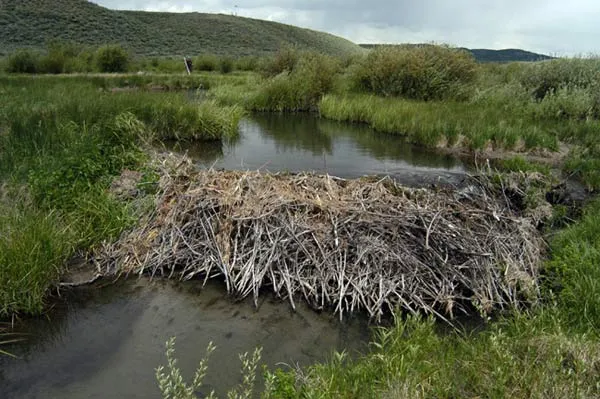
The busy beaver's iconic dams do more than hold back streams; they also provide critical habitat to some migratory songbirds, a new study finds.
The study, detailed in the October issue of the journal Western North American Naturalist, found that through dam building, beavers create ponds and stimulate growth of diverse streamside vegetation critical for birds, including many migratory songbirds that are currently in decline.
"We found that increasing density of beaver dams was associated with a diverse and abundant bird community and the wetland and streamside habitat these species depend on," said lead study author Hilary Cooke, a graduate student at the University of Alberta in Edmonton, Canada.
A 2007 study in the journal Biological Conservation found that beaver dams are also critical to maintaining the habitats of frogs and toads.
The study, conducted in Wyoming, found that the effect was particularly important in the semi-arid interior of western North America.
“This habitat is critical to birds in semi-arid regions yet has been severely degraded or lost through much of the West," Cooke said. "Our results suggest that management of beavers may be an important tool for restoring habitat and reversing bird declines.”
Beaver populations once numbered in the millions in the American West but dramatically collapsed due to the fur trade in the 1800s. Currently, beaver are often considered a pest species when they take down trees and flood property.
Beavers, and their dams, are missing from most watersheds in the West, but the study researchers say this and other studies have shown how critical these wood-chomping creatures are to maintaining stream ecosystems.
"Beaver are an essential ecosystem engineer," said co-author Steve Zack of the Wildlife Conservation Society (WCS), which sponsored the study. "Beavers help repair degraded stream habitats and their dams and associated ponds recharge local water tables and create wetlands."
Maintaining local water resources is another issue currently facing Western communities and ecosystems.
"With our changing climate likely to mean increasing droughts in the West, managing ways to allow watersheds to act more like sponges will be a challenge," Zack said. "Beaver are a powerful tool to be considered for that, and the associated benefits to other wildlife add to their value.”
In 2007, the WCS reported that they had found the first active beaver lodge seen in New York City in at least two centuries. The lodge was discovered in the Bronx River on the grounds of the Bronx Zoo.

