It's quick and easy to access Live Science Plus, simply enter your email below. We'll send you a confirmation and sign you up for our daily newsletter, keeping you up to date with the latest science news.
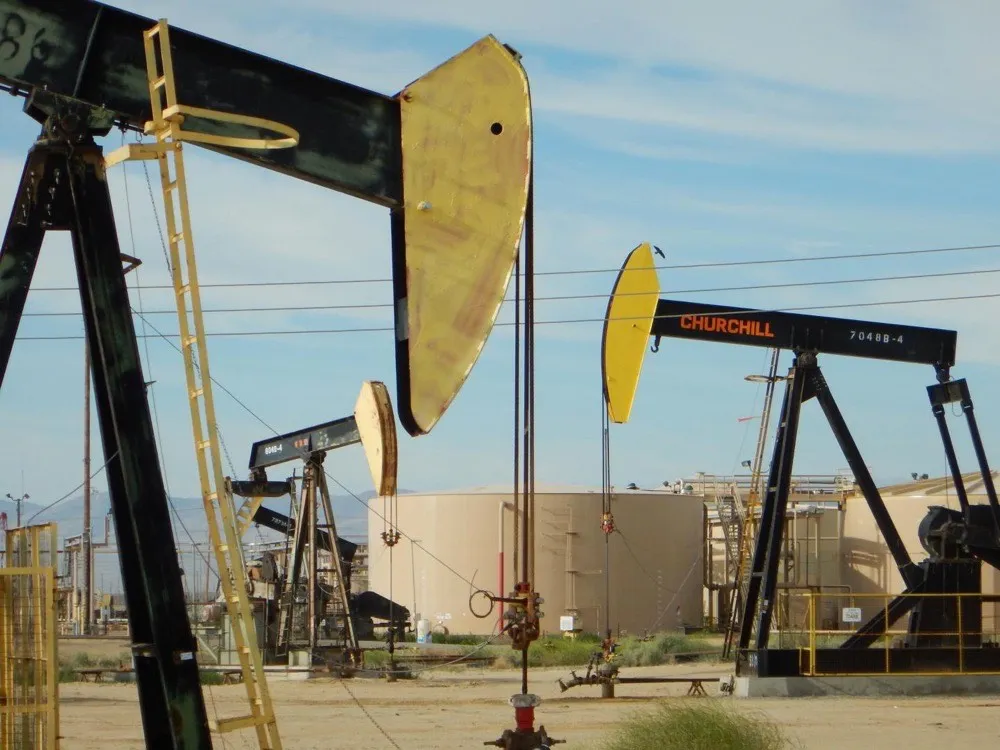
The Lost Hills Oil Field in Kern County, California, near Bakersfield. Researchers used data from oil and gas wells to determine that California's Central Valley has more water than previously thought.
California has more water in reserve than previous estimates suggested, new research finds — but it will be expensive to pump it from the ground and treat it for use.
Deep groundwater aquifers under California's Central Valley contain enough usable water to bring the Central Valley's groundwater stores to about 650 cubic miles (2,700 cubic kilometers), Stanford University researchers reported June 27 in the journal Proceedings of the National Academy of Sciences. That's three times more groundwater as in earlier estimates.
The additional water is deep and briny, but given that California is in its fifth year of drought, it may be worth the expense to use it, the researchers said.
"Water 1,000 feet [300 meters] down used to be too expensive to use," study researcher Robert Jackson, a senior fellow at Stanford's Woods Institute for the Environment, said in a statement. "Today, it's used widely. We need to protect all of our good-quality water." [Spider Rain? Weird Effects of the California Drought]
Deep water
Agricultural fields are irrigated next to an oil well in Kern County, California.
(Image credit: Rob Jackson, Stanford University)
Jackson and his team used data from more than 35,000 oil and gas wells in eight counties to determine the prevalence of groundwater in both deep and shallow aquifers. Before this research, these deep aquifers had not been well studied.
Most of the newly discovered water is between 1,000 and 3,000 feet (300 and 900 m) below the surface, which means it will be expensive to sink wells and pump the water to the surface. The water has a higher salt concentration than shallower groundwater, meaning it will need to be desalinated before use. Both factors make deep-aquifer water expensive.
Water flows through the California Aqueduct near the Lost Hills Oil Field.
(Image credit: Rob Jackson, Stanford University)
There are safety and environmental questions as well. The pumping of shallow aquifers has led to subsidence in the Central Valley as the ground level settles. According to the U.S. Geological Survey, groundwater pumping that started in the 1920s caused more than a foot (0.3 m) of subsidence over more than half of the San Joaquin Valley by the 1970s, with some areas dropping in elevation by as much as 28 feet (8.5 m). Today, the agency monitors subsidence in the valley with tools called extensometers as well as GPS. Deep-aquifer pumping could exacerbate the problem, the researchers warned.
Sign up for the Live Science daily newsletter now
Get the world’s most fascinating discoveries delivered straight to your inbox.
Oil and gas drilling also threatens close to one-third of the Central Valley's aquifer, the researchers said. In Kern County, one out of every six oil or gas wells was drilling through freshwater aquifers, they found. These oil and gas activities have the potential to affect water quality because of chemicals used in the drilling process. However, the researchers noted that the simple presence of oil and gas drilling does not necessarily affect groundwater.
"What we are saying is that no one is monitoring deep aquifers," study researcher Mary Kang, a postdoctoral associate at Stanford School of Earth, Energy & Environmental Sciences, said in the statement. "We might need to use this water in a decade, so it's definitely worth protecting."
Stephanie Pappas is a contributing writer for Live Science, covering topics ranging from geoscience to archaeology to the human brain and behavior. She was previously a senior writer for Live Science but is now a freelancer based in Denver, Colorado, and regularly contributes to Scientific American and The Monitor, the monthly magazine of the American Psychological Association. Stephanie received a bachelor's degree in psychology from the University of South Carolina and a graduate certificate in science communication from the University of California, Santa Cruz.