
 Live Science Plus


See-Through Frogs Discovered

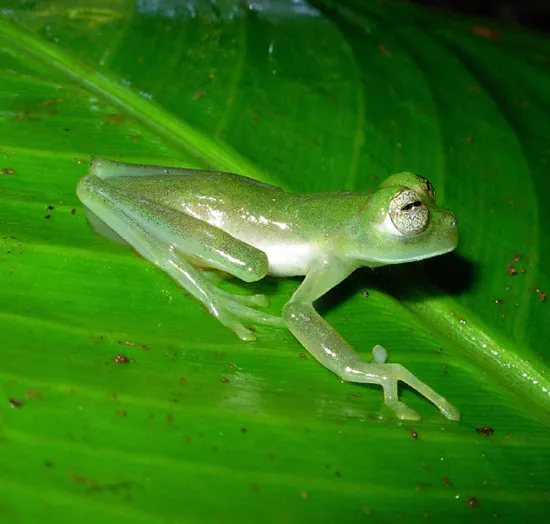
Ten newfound species of amphibians — including a frog with spiky skin and three varieties of frogs with transparent skin — have been discovered in the mountains of Colombia.
The new species were found on a recent expedition led by herpetologists from Conservation International and ornithologists from the Ecotrópico Foundation in Colombia's mountainous Tacarcuna area of the Darien, near the border with Panama.

Of the 60 documented amphibians, the potentially new species include three glass frogs of the Nymphargus, Cochranella and Centrolene genera; three poison dart frogs in the Dendrobatidae family (Colostethus, Ranitomeya and Anomaloglossus genera); one harlequin frog of the Atelopus genus; two species of rain frogs of the Pristimantis genera; and one salamander of the Bolitoglossa genus.
Colombia holds one of the most diverse amphibian communities in the world, with 754 species currently recorded.
Amphibians are considered important indicators of ecosystem health because their porous, absorbent skin makes them highly susceptible to pollution and climate change. Many frog and amphibian species around the world have suffered die-offs in recent years because of a lethal fungus that infects their skin and spreads quickly between geographic areas.
"Without a doubt this region is a true Noah's Ark," said Jose Vicente Rodriguez-Mahecha, scientific director of Conservation International-Colombia. "The high number of new amphibian species found is a sign of hope, even with the serious threat of extinction that this animal group faces in many other regions of the country and the world."
The expedition also recorded the presence of large mammals such as Baird's tapir (Tapirus bairdii), whose closest relatives include horses and rhinoceroses, and which are listed on the IUCN Red List as endangered in Colombia.
The biologists also found four species of monkeys, including Geoffroy's spider monkey (Ateles geoffroyi), Geoffroy's tamarin or red crested bare-faced tamarin (Saguinus geoffroyi), white-throated capuchin or Gorgona white-fronted capuchin (Cebus capucinus), and the mantled howler monkey (Alouatta palliata). Populations of the white-lipped peccary (Tayassu pecari), which resembles a furry pig, also were found.
Other surprising findings included the presence of Central American species recorded for the first time in the northern area of South America, including a salamander (Bolitoglossa taylori), a rain frog (Pristimantis pirrensis), a small lizard (Ptychoglossus myersi) and a snake not yet identified.
- Video – Frogs Tune In to Different Frequencies
- Images: Snakes, Frogs and Lizards
- Top 10 New Species
