 Live Science Plus





You are now subscribed
Your newsletter sign-up was successful
Want to add more newsletters?

Delivered Daily
Daily Newsletter
Sign up for the latest discoveries, groundbreaking research and fascinating breakthroughs that impact you and the wider world direct to your inbox.

Once a week
Life's Little Mysteries
Feed your curiosity with an exclusive mystery every week, solved with science and delivered direct to your inbox before it's seen anywhere else.

Once a week
How It Works
Sign up to our free science & technology newsletter for your weekly fix of fascinating articles, quick quizzes, amazing images, and more

Delivered daily
Space.com Newsletter
Breaking space news, the latest updates on rocket launches, skywatching events and more!

Once a month
Watch This Space
Sign up to our monthly entertainment newsletter to keep up with all our coverage of the latest sci-fi and space movies, tv shows, games and books.

Once a week
Night Sky This Week
Discover this week's must-see night sky events, moon phases, and stunning astrophotos. Sign up for our skywatching newsletter and explore the universe with us!
Join the club
Get full access to premium articles, exclusive features and a growing list of member rewards.
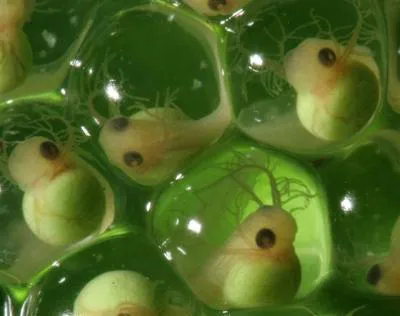
Though unconscious and underdeveloped, red-eyed treefrog embryos can rotate inside their eggs to get more oxygen if levels start to drop, prolonging chances for survival, a new study shows. The embryos are ready to hatch just four days after they’re laid, but delaying the process a few days can boost survival rates; tadpoles that are more mature can more easily swim away from lurking predators. But as an embryo continues to develop, more oxygen is recycled from a limited supply inside the egg. Oxygen levels have been found to be as low as 2 percent in the middle of the frogs' eggs, yet they’re still viable and fail to hatch early, said researcher Karen Warkentin, associate professor at Boston University. In response to the risk of suffocating, the embryos were found to position their external gills in a small high-oxygen area, a sweet spot near the egg’s exposed surface, she found. This rotation allows the embryos to maintain high metabolic rates. To observe this phenomenon, Jessica Rogge, an undergraduate at BU working with Warkentin, physically turned the eggs using a probe so that their gills were positioned away from the surface, where oxygen levels are lower. What she found was that even very young embryos, before they could develop gills, blood, or the ability for muscular movement, spiraled their developing heads slowly back toward the oxygen-rich spot. External gills aren’t much use to tadpoles, once born, but they seem to be critical for developing embryos if they are to get enough oxygen, Warkentin said. Early development is critical for frog embryos, a time when they are vulnerable to predators. Natural selection will favor any ability the red-eyed treefrog (Agalychnis callidryas) may have that increases its chances of survival. This work, detailed in Nov. 7 issue of the Journal of Experimental Biology, was supported by the Smithsonian Tropical Research Institute, Boston University and the National Science Foundation, and conducted in Gamboa, Panama.
- Gallery: New Amphibian Tree of Life
- Ten Species Success Stories
- Transitional Frog Lays Eggs on Water and Land
