













Frogs Hatch Earlier to Escape Snacking Snakes

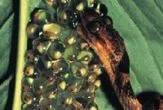
If the red-eyed tree frog embryo waits too long to hatch during its roughly one-week incubation period, it might become a meal instead. But nature has given this frog the clever ability to recognize vibrations created in a snake attack and hatch a few days early in order to escape, a new study found.
The embryos huddle in gelatinous blobs, clinging to tree leaves that hang over watery locations in Panama. When snakes find them, they start munching.
If you're not among the first embryos in a blob to be eaten, you have some time to get away.
A snake bites on a blob of frog embryos. Credit: Karen Warkentin
After the initial bite, the embryos start to wiggle frantically, the study found. They rupture their egg capsules and drop into the water. Now called tadpoles, they swim to safety. The embryos can hatch up to three days sooner than normal when attacked.
Lots of things can shake an egg blob, though. Like a heavy rain. It seems the embryos pay attention not to the speed of the vibrations or their force, but rather to a characteristic amount of time between movements that indicates a predator is in their midst.
Karen Warkentin of Boston University and her colleagues figured this out by inserting a miniature accelerometer, a device like a microphone that records vibrations instead of sounds, into clutches of eggs. Then they let the snakes have at it. Likewise, they recorded vibrations during rainstorms.
"Snake bites, in general, last longer than raindrops, and the spaces between snake bites are generally longer than the spaces between raindrops," Warkentin said.
Get the world’s most fascinating discoveries delivered straight to your inbox.
The research will be detailed in the July issue of the journal Animal Behaviour.
