 Live Science Plus





You are now subscribed
Your newsletter sign-up was successful
Want to add more newsletters?

Delivered Daily
Daily Newsletter
Sign up for the latest discoveries, groundbreaking research and fascinating breakthroughs that impact you and the wider world direct to your inbox.

Once a week
Life's Little Mysteries
Feed your curiosity with an exclusive mystery every week, solved with science and delivered direct to your inbox before it's seen anywhere else.

Once a week
How It Works
Sign up to our free science & technology newsletter for your weekly fix of fascinating articles, quick quizzes, amazing images, and more

Delivered daily
Space.com Newsletter
Breaking space news, the latest updates on rocket launches, skywatching events and more!

Once a month
Watch This Space
Sign up to our monthly entertainment newsletter to keep up with all our coverage of the latest sci-fi and space movies, tv shows, games and books.
Once a week
Night Sky This Week
Discover this week's must-see night sky events, moon phases, and stunning astrophotos. Sign up for our skywatching newsletter and explore the universe with us!
Join the club
Get full access to premium articles, exclusive features and a growing list of member rewards.
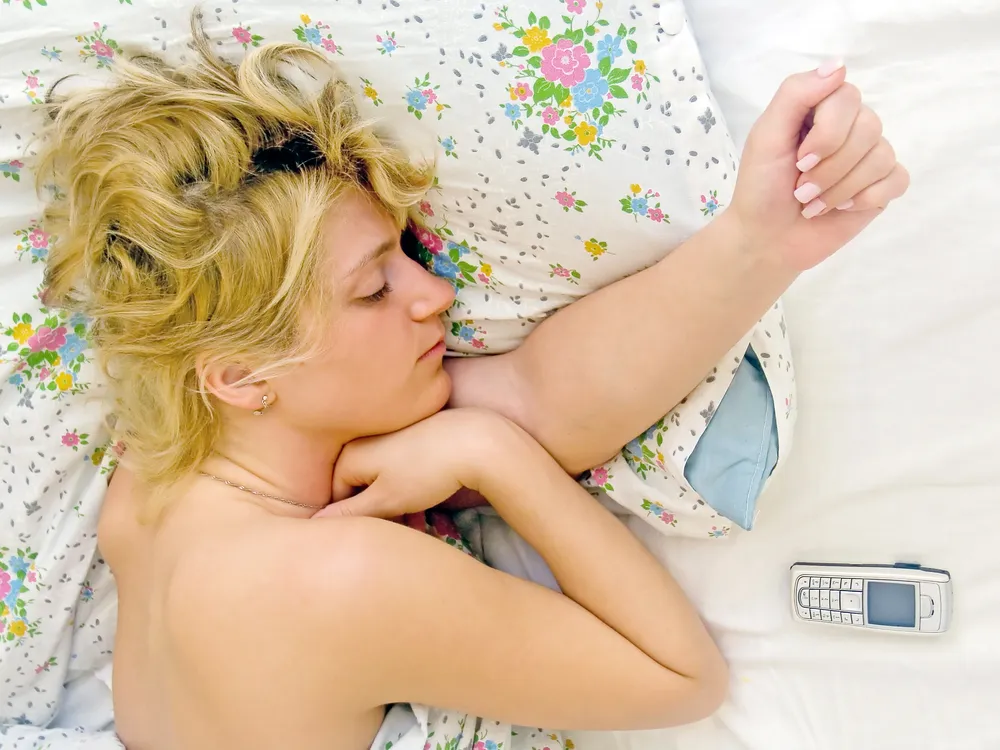
Remember sleep? You know, it's the activity that involves lying in bed and doing nothing for hours. For a growing number of cellphone users who "sleep-text," however, a good night's rest is a thing of the past.
Sleep-disorder specialists are reporting that sleep-texting, which a person may perform several times over the course of a single night, is an alarming trend.
"Four o'clock in the morning, 3 o'clock in the morning — it would just be a sentence of jumbled-up stuff," sleep-texter Megan told CBS New York. "I guess I got up and texted, and went back to bed, but I don't remember it." [10 Most Sleep-Deprived Careers]
Of course, sleep-texting can cause some embarrassing situations. Elizabeth Dowdell, a professor of nursing at Villanova University in Pennsylvania, has investigated the phenomenon of sleep-texting among college students.
One young woman Dowdell studied had a habit of sending gushing, romantic texts to platonic friends. "A classmate texted her something about anatomy class, and her reply back was, 'I just love it. I love you! You're the light of my life,'" Dowdell told US News & World Report. "Then, there was an old boyfriend who texted her, and she sent responses like, 'I adore you, please come over,' while she was asleep. She was mortified when she realized."
Aside from compromising situations, sleep-texting may cause health issues as well. In many cases, sleep-texting occurs about two hours after a person falls asleep, when deep, restful REM (rapid eye movement) sleep would normally begin.
Most sleep-disorder specialists recommend people get seven to eight hours of sleep each night — lack of sleep has been linked to a number of health conditions, including obesity, heart disease, depression, high blood pressure, immune-system dysfunction and other issues.
"Sleep is a very important restorative process," Dr. Josh Werber, a sleep and snoring specialist, told US News. "And when we're not fully engaged in it, and not getting the amount we need, we're not having the same restorative effect on our brains — and that affects our cognitive ability the next day."
Laura Hogya is an admitted serial sleep-texter. "I wake up exhausted the next day, and I don't know if it's from tossing and turning, or answering a text message," Hogya told CBS New York. "If I answer a client e-mail — that's something that I have to worry about."
Modern technologies like smartphones have a pervasive influence on modern life, especially among younger users, who may be particularly susceptible to "smartphone addiction." And use of smartphones, computers, video games and other technologies has been linked to pervasive sleep disorders, including insomnia.
To ward off sleep-texting, experts recommend shutting devices down completely before going to bed or, in extreme cases, moving the cellphone out of the bedroom entirely. For optimal sleeping conditions, Werber and other sleep specialists also recommend turning off devices about an hour before going to bed — the bright light they produce can inhibit the production of the sleep-inducing hormone melatonin, which is produced in dark light.
Follow Marc Lallanilla on Twitter and Google+. Follow us @livescience, Facebook & Google+. Original article on LiveScience.

