 Live Science Plus





You are now subscribed
Your newsletter sign-up was successful
Want to add more newsletters?

Delivered Daily
Daily Newsletter
Sign up for the latest discoveries, groundbreaking research and fascinating breakthroughs that impact you and the wider world direct to your inbox.

Once a week
Life's Little Mysteries
Feed your curiosity with an exclusive mystery every week, solved with science and delivered direct to your inbox before it's seen anywhere else.

Once a week
How It Works
Sign up to our free science & technology newsletter for your weekly fix of fascinating articles, quick quizzes, amazing images, and more

Delivered daily
Space.com Newsletter
Breaking space news, the latest updates on rocket launches, skywatching events and more!

Once a month
Watch This Space
Sign up to our monthly entertainment newsletter to keep up with all our coverage of the latest sci-fi and space movies, tv shows, games and books.

Once a week
Night Sky This Week
Discover this week's must-see night sky events, moon phases, and stunning astrophotos. Sign up for our skywatching newsletter and explore the universe with us!
Join the club
Get full access to premium articles, exclusive features and a growing list of member rewards.
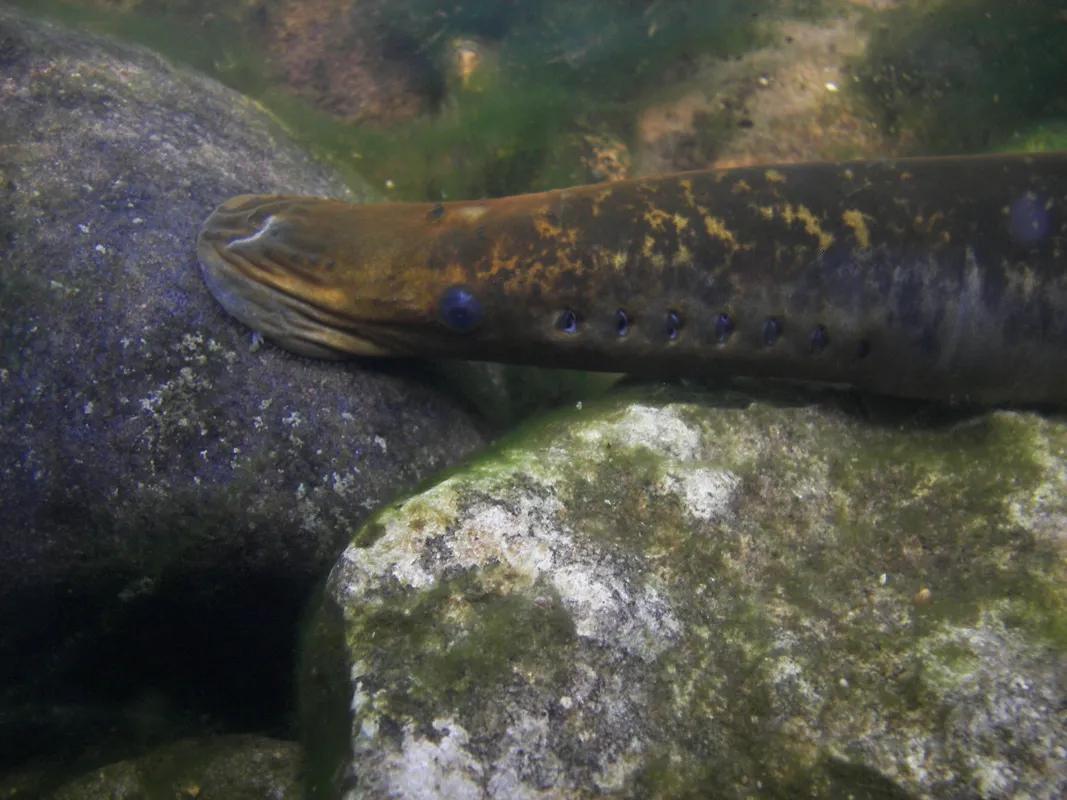
Male sea lampreys need to be pretty hot to attract females — thermally hot, that is.
Biologists from Michigan State University have discovered a ridge of fat cells near the anterior dorsal fins of sexually mature male lampreys that heats up when females approach. Until now, scientists had thought this "fat bump" was just ornamental.
In addition, this is the first such thermogenic, or heat-producing, tissue identified in a cold-blooded species, the team reported last week in The Journal of Experimental Biology. [See Video of Lampreys' Hot Sex]
"In bears, when they come out of hibernation, this type of brown fat helps them become active again," said Yu-Wen Chung-Davidson, a biologist at Michigan State University and a co-author of the paper. "This fish also has this fat cell that generates heat. It's beyond my imagination."
Producing heat is energy-intensive and burns a lot of calories, especially in cold-blooded animals. But sea lampreys die once they spawn, so it's in their best interest to use up whatever energy they have to secure a mate, Chung-Davidson told LiveScience.
The exact role the heat plays in lampreys' animal sex remains unclear. The team found that temperatures rose up to about 0.5 degrees Fahrenheit (0.3 degrees Celsius), but varied depending on the female, suggesting that males chose to invest more energy in more attractive mates. Heat does not travel well through water, so the group believes that males first use pheromones, or chemical signals, to lure females from afar and then continue to encourage spawning with heat once they make body contact.
Once the two jawless fish make body contact, the male uses his suction-cup mouth to attach to the female's head, and the pair begins thrusting vigorously — essentially pushing out their respective gametes, eggs and sperm into the water. The gametes settle in a nest, or a pebbly depression that the female digs out with her tail.
Sea lampreys are considered parasites — they feed on the blood of other fish in both freshwater and saltwater — and have become an invasive species in the Great Lakes. The research group hopes that by better understanding how these fish mate, they will be able to develop more effective population-control strategies.
"During their lifetime, they kill 40 pounds of fish," Chung-Davidson said. "It's a big problem in the Great Lakes."
Next, the team plans to search for a heat receptor in females in order to better understand how females might perceive the signal.
Follow Laura Poppick on Twitter. Follow us @livescience, Facebook & Google+. Original article on Live Science.

