













'Extinct' Frog Reappears in Israel

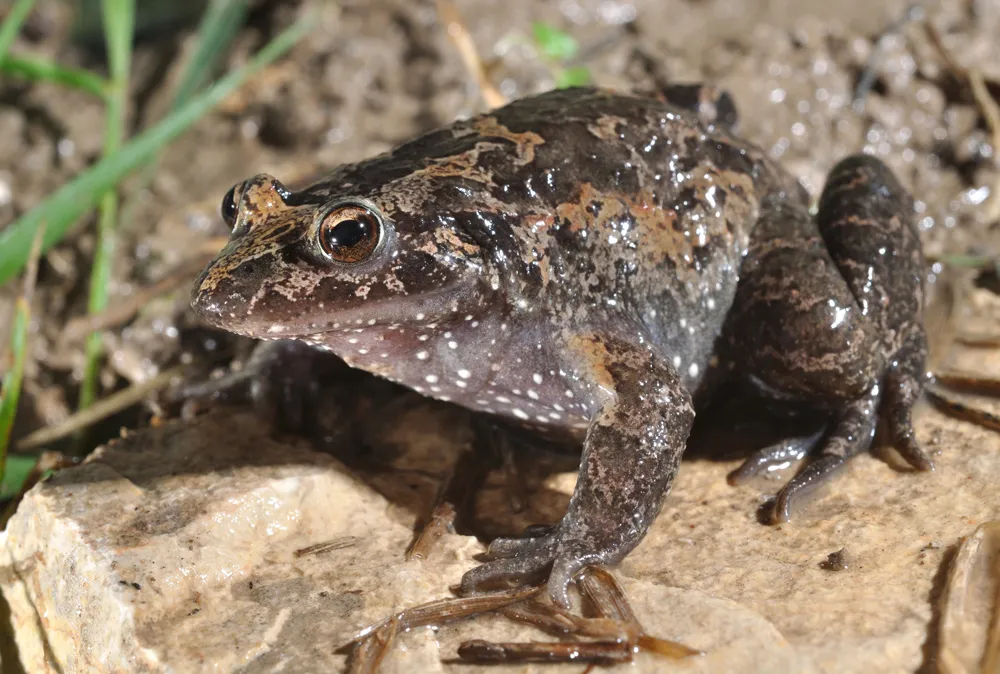
The Hula painted frog was declared extinct in 1996, the first time any amphibian had been declared extinct by the International Union for Conservation of Nature (IUCN), a conservation group.
The decision was guided by the best available scientific data at the time: Nobody had seen any sign of the creature since its sole known habitat, the Hula Valley wetlands in northern Israel, had been drained in 1955. Then, in October 2011, a routine patrol turned up an adult male of the species. Further searching uncovered another 10 Hula painted frogs.
It's a remarkable case of a species reappearing, said Rebecca Biton, a paleontologist at the Hebrew University of Jerusalem, and co-author of a study describing the reappearance of the frog published this week in the journal Nature Communications.
But the story doesn't end there. An equally amazing finding, Biton said, is that the Hula painted frog, contrary to its previous classification, is the only surviving member of a long-lost group of frogs, in the genus Latonia (genus is the taxonomic classification above species). Her team arrived at this conclusion in two ways. First, Biton's analysis of ancient frog bones showed they looked much more like Latonia then the other painted frogs of the Middle East, to which they were supposedly more closely related. Second, DNA analysis suggested the same.
"The Hula painted frog is not what we thought it was," Biton told LiveScience, a conclusion that may not have materialized if it weren't for the team's interdisciplinary work, she added. "It's nice when genetics and paleontology can work together and get the same result."
All the other frogs in the genus Latonia once ranged throughout much of Europe, but have been gone for about 1 million years, Biton told LiveScience.
There are perhaps 100 to 200 Hula painted frogs left holding on in the Hula Valley, and they remain a critically endangered species. Scientists know next to nothing about the frog's life history, however, Biton said. Researchers are currently working to find out more, and there are tentative plans to re-flood parts of the valley and pursue other projects to help prevent the frog from becoming (actually) extinct.
Get the world’s most fascinating discoveries delivered straight to your inbox.
Email Douglas Main or follow him on Twitter or Google+. Follow us @livescience, Facebook or Google+. Article originally on LiveScience.com.
