 Live Science Plus





You are now subscribed
Your newsletter sign-up was successful
Want to add more newsletters?

Delivered Daily
Daily Newsletter
Sign up for the latest discoveries, groundbreaking research and fascinating breakthroughs that impact you and the wider world direct to your inbox.
Once a week
Life's Little Mysteries
Feed your curiosity with an exclusive mystery every week, solved with science and delivered direct to your inbox before it's seen anywhere else.
Once a week
How It Works
Sign up to our free science & technology newsletter for your weekly fix of fascinating articles, quick quizzes, amazing images, and more

Delivered daily
Space.com Newsletter
Breaking space news, the latest updates on rocket launches, skywatching events and more!

Once a month
Watch This Space
Sign up to our monthly entertainment newsletter to keep up with all our coverage of the latest sci-fi and space movies, tv shows, games and books.

Once a week
Night Sky This Week
Discover this week's must-see night sky events, moon phases, and stunning astrophotos. Sign up for our skywatching newsletter and explore the universe with us!
Join the club
Get full access to premium articles, exclusive features and a growing list of member rewards.
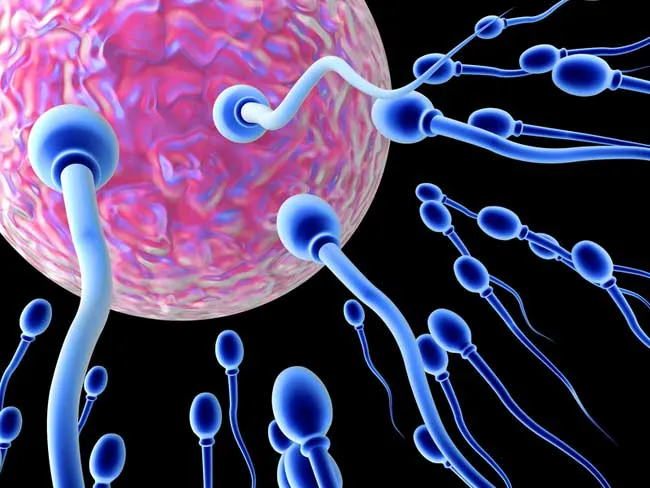
You'd better eat your blueberries: Men who don't get enough antioxidants can have problems with infertility.
A study published online recently in the journal Fertility and Sterility discovered that men who ate antioxidant-rich fruits and vegetables have better rates of sperm movement, ejaculate volume, and sperm concentration than those who ate diets heavy in meat and full-fat dairy foods.
Antioxidants have been the darlings of the nutritional world as of late — pomegranate juice, anyone? — and possibly for good reason. They are thought to slow the aging process, boost the immune system, and help protect against free radicals, which damage cells and make us more susceptible to degenerative diseases such as cancer, arthritis, Parkinson's disease, and Alzheimer's disease.
And now stronger sperm can be added to the list of benefits.
The research, conducted by several universities in Spain, asked 61 men — 30 with poor semen quality, and 31 with normal semen — to rate the frequency with which they ate 93 different foods. None of the participants took dietary or vitamin supplements during the duration of the study.
The men with normal semen ate significantly more carbs, fiber, and antioxidants, specifically folates, vitamin C, and lycopene, than did the men with the lesser semen.
Does that mean that men who want to improve their sperm should start loading up on antioxidants? Yes, says Jaime Mendiola, the study's head and a researcher at the University of Murcia, adding that the participants were ready to do just that.
"Some of the men were willing to change their eating habits," Mendiola tells LiveScience. "In fact, the next 'ideal' study would be to compare if this change in diet pattern may improve semen quality in case subjects."
So what is the best source of antioxidants? Carrie Bloxson, a New York City-based nutritional health counselor who is unaffiliated with the study, says that eating whole foods is the way to go.
"You should use nutritional supplements just like they are labeled — as a supplement, not a substitute," she says. "I also recommend taking a food-based supplement over a synthetic, as your body will absorb the supplement better because you’re not processing a bunch of chemicals."
Bloxson recommends the following antioxidant-packed foods:
- Folates: spinach, asparagus, and lentils.
- Vitamin C: broccoli, oranges, and strawberries.
- Lycopene: tomatoes, watermelon, and grapefruit.
Happily, research has found that red wine contains antioxidants, too — just another reason to open a bottle on a romantic evening.
Sally Law has written about health and sexuality for the Cleveland Clinic, and has appeared regularly as a guest host on Sirius Radio. Her column, The Science of Sex, appears weekly on LiveScience.
