
Ancient Tree Rings Identify Mesoamerican Droughts

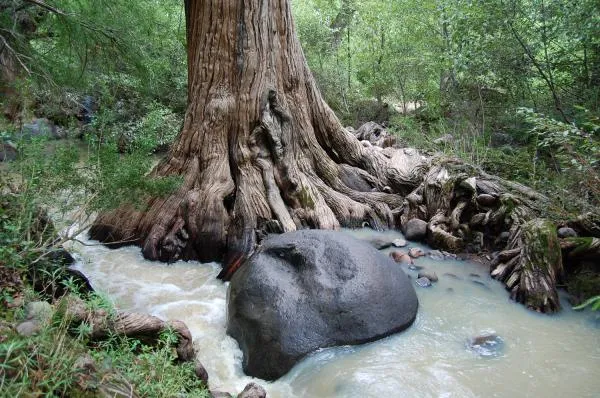
Clues about the collapse of pre-Hispanic civilizations in Mexico lie in the climate records of ancient trees that have been traced back year-by-year over the past 12 centuries, a new study reveals.
The new 1,238-year-long tree-ring chronology is the longest and most accurate of its kind for ancient Mexico and Central America (or Mesoamerica). The study is the first to reconstruct the yearly climate of pre-colonial Mexico over more than a millennium, pinning down four ancient megadroughts to their exact years.
One large ancient drought previously confirmed for the U.S. Southwest was shown to have extended into central Mexico from 1149 to 1167. The drought may have devastated the local maize crops, a potentially fatal blow to the declining Toltec culture, said study lead author David Stahle, a paleoclimatologist at the University of Arkansas at Fayetteville.
Article continues belowThe new record also pins down more precisely than ever before the timing of two other severe dry periods, possibly leading to new insights into the Aztecs' rise to power and into the spread of exotic diseases that Spanish conquistadores brought to America. The rainfall study also confirmed the so-called Terminal Classic drought that some anthropologists relate to the collapse of the Mayan civilization .
"Certainly these cultural changes were very complicated probably not one single explanation can account for the collapse of the Mayan civilization," Stahle said. "[But] our study will allow other scientists to more thoroughly investigate and understand the impact of these droughts."
The study team looked at 30 specimens of millennium-old Montezuma bald cypress trees (Taxodium mucronatum) growing near Tenochtitlan, capital of the Aztec empire, and Tula, the Toltec state's main city. This tall tree species, related to North American sequoias, is the only plant in Central America that frequently lives up to 1,000 years or more, Stahle said.
"This is the national tree of Mexico, and it tells such an interesting story of the decline of the Mexican empires," Stahle said, adding that. "This is the first one that goes back into pre-Hispanic times."
Get the world’s most fascinating discoveries delivered straight to your inbox.
Tree rings give a precise estimate for wetness for every single year, Stahle said. The researchers determined the year of formation for each tree ring and analyzed what the rings' growth patterns had to say about how soil moisture varied from growth season to growth season over the years, a parameter directly associated with rainfall.
"This research ... highlights the role fine-grained climate data can play in helping us understand the trajectories of past human societies," said David Anderson, an archaeologist at the University of Tennessee in Knoxville, who was not involved in the new study. "This study will prompt a great deal of follow-up research by archaeologists and paleoclimatologists alike, and offers lessons for our own civilization specifically how vulnerable complex societies may be to drought-induced crop failures."
The study will be published in an upcoming edition of the journal Geophysical Research Letters.
