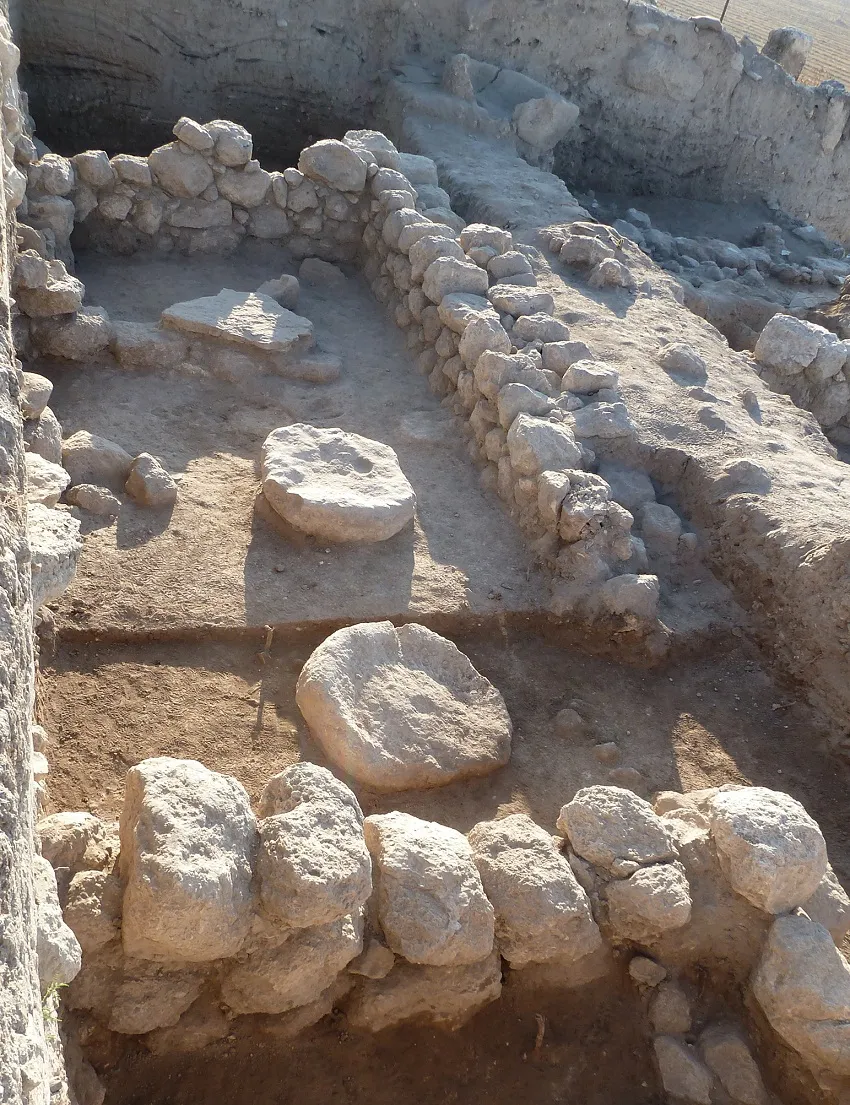
At a biblical border city outside of Jerusalem, archaeologists have uncovered a temple from the 11th century B.C. that they say bears evidence of conflict among the ancient Israelites, Canaanites and Philistines.
Spread across what would have been the floor at the complex at Tel Beth-Shemesh, an ancient village about 12 miles (20 kilometers) west of Jerusalem, excavators found shards of painted chalices and goblets — not the type of containers that would have been used for daily household activities. They also found animal bones surrounding a flat stone inside the building and discovered two more flat stones seemingly designed to direct liquids. Lacking the typical traces of domestic use, the excavators believe the building served as a place of worship that was possibly connected to an Israelite cult.
But the complex didn't stay holy for long. The archaeologists found evidence that the temple was destroyed. What's more, an analysis of dirt at the site turned up microscopic remains of plants commonly eaten by livestock as well as the remnants of poop from grass-eating animals, suggesting the site was appropriated as a livestock pen.
The excavators believe the animal takeover of the temple might represent a deliberate desecration by the Philistines, who lived alongside, though hardly peacefully, with the Israelites and Canaanites. The ancient village of Beth-Shemesh, located at the crossroads of the three groups, frequently changed hands between the Philistines and the Canaanite and Israelite populations that resisted them. The researchers say the Philistines likely gained temporary control of Beth-Shemesh and then brought in livestock to reside on what they knew had been a holy place for their enemies.
Bird's-eye view over the sacred complex, with round stone structure at right and temple at left.
(Image credit: SkyView)
But further evidence suggests the ancestors of the worshippers may have eventually returned. The archaeologists found several round clay ovens known as "tabuns" in the layer of soil excavated above the temple's ruins. These food-prepping features are usually found near ancient living quarters, not sacred sites, but the researchers may have an explanation for the ovens.
"We believe that ancestors of those who had built the original complex came back to rebuild the site," archaeologist Zvi Lederman, of Tel Aviv University, said in a statement, adding that the ovens may have been used to cook feasts to honor the memory of the old temple after the Philistines pulled out of the area.
Sign up for the Live Science daily newsletter now
Get the world’s most fascinating discoveries delivered straight to your inbox.
The researchers are planning further excavations at the site and their findings will be presented this month at the annual meeting of the American Schools of Oriental Research in Chicago.
For the science geek in everyone, Live Science offers a fascinating window into the natural and technological world, delivering comprehensive and compelling news and analysis on everything from dinosaur discoveries, archaeological finds and amazing animals to health, innovation and wearable technology. We aim to empower and inspire our readers with the tools needed to understand the world and appreciate its everyday awe.