 Live Science Plus





You are now subscribed
Your newsletter sign-up was successful
Want to add more newsletters?

Delivered Daily
Daily Newsletter
Sign up for the latest discoveries, groundbreaking research and fascinating breakthroughs that impact you and the wider world direct to your inbox.

Once a week
Life's Little Mysteries
Feed your curiosity with an exclusive mystery every week, solved with science and delivered direct to your inbox before it's seen anywhere else.

Once a week
How It Works
Sign up to our free science & technology newsletter for your weekly fix of fascinating articles, quick quizzes, amazing images, and more

Delivered daily
Space.com Newsletter
Breaking space news, the latest updates on rocket launches, skywatching events and more!

Once a month
Watch This Space
Sign up to our monthly entertainment newsletter to keep up with all our coverage of the latest sci-fi and space movies, tv shows, games and books.

Once a week
Night Sky This Week
Discover this week's must-see night sky events, moon phases, and stunning astrophotos. Sign up for our skywatching newsletter and explore the universe with us!
Join the club
Get full access to premium articles, exclusive features and a growing list of member rewards.
Today's negative connotations tied to cynicism might be historically inaccurate, new research suggests.
A classics professor seeks to restore the reputation of the ancient school of Greek philosophers known as the Cynics, showing that they actually advocated a short path to a life of happiness.
"We don't have good scholarship on the Cynics," University of Cincinnati classicist Susan Prince said in a statement. "They're seen as misanthropes and as sloppy and dirty people who want to cut down the elite. But there's a positive strand that needs to be recovered."
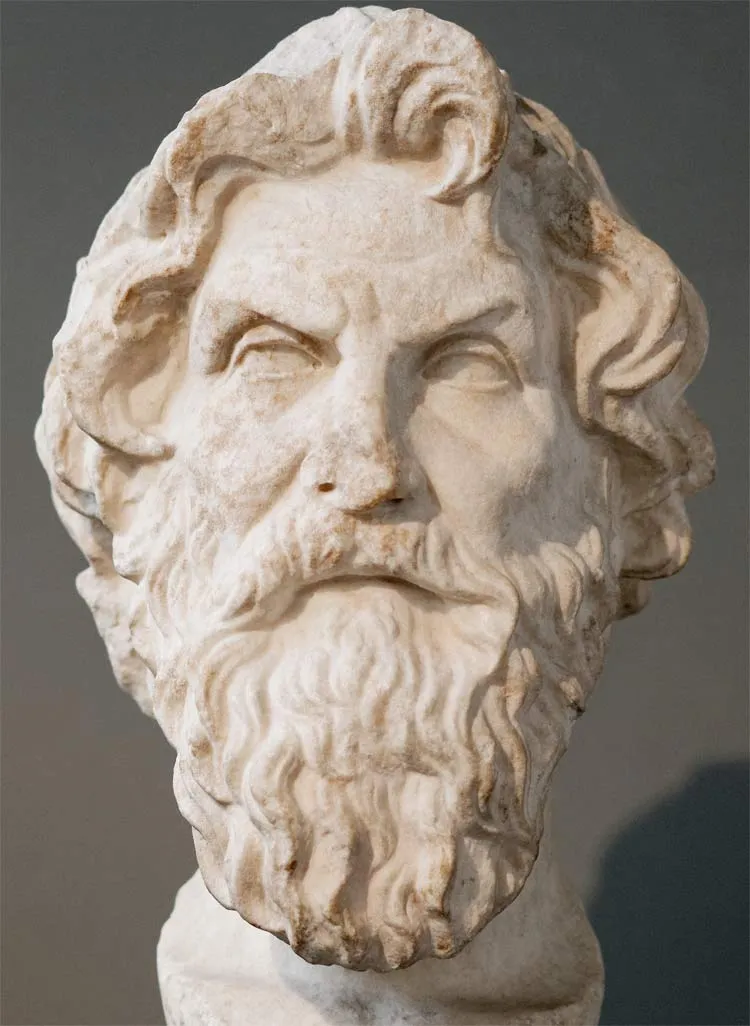
Antisthenes, a student of Socrates who lived from 445 B.C. to 365 B.C., is considered the primary influence on the Cynic movement. He outlined a school of philosophy that skipped over the technical aspects of logic to focus on ethical literature. Antisthenes also promoted immediate, drastic life changes that would provide a quick but challenging path to virtue and happiness.
He called for the abandonment of many social conventions, such as giving up fancy clothes and elaborate meals, to live ethically in accord with nature. This shortcut, Prince explained, would allow Cynics time for what Antisthenes called "seeing the things worth seeing and hearing the things worth hearing."
"You get to your happiness quickly, and then you practice your happiness for the rest of your life," Prince said.
The researcher explained that Antisthenes may have played a role in Plato's ideas, some of which were developed during intellectual debates with the Cynics.
"Plato didn't become great by himself," Prince said. "Antisthenes was very important as one of the interlocutors who wasn't always Plato’s enemy. Their relationship was more like a sibling rivalry."
Prince is presenting her research this week at the Unisa Classics Colloquium hosted at the University of South Africa in Pretoria.
Follow LiveScience on Twitter @livescience. We're also on Facebook & Google+.

